

Time Blocking: How to Protect Time for the Life You Really Want
A calendar is one of the most honest piece of information we own. Whatever we say matters to us, it shows exactly where our hours go. And for most of us, a quick look tells a familiar story: meetings, deadlines, appointments and other people’s priorities, packed edge to edge, with our own lives squeezed into whatever’s left over.
We tend to read that as a time problem. If only there were more hours, we’d finally exercise, see our friends, work on the project we keep postponing. But more often, it’s a placement problem. The things that matter most to us never get a place in the day, so they’re always the first to be pushed aside. That’s where time blocking comes in.
In this article, you’ll learn what time blocking is, why it works so well according to the research on planning and attention, and how to use it to protect time for your whole life, not just your work.
Save this article
Give your time to what really matters
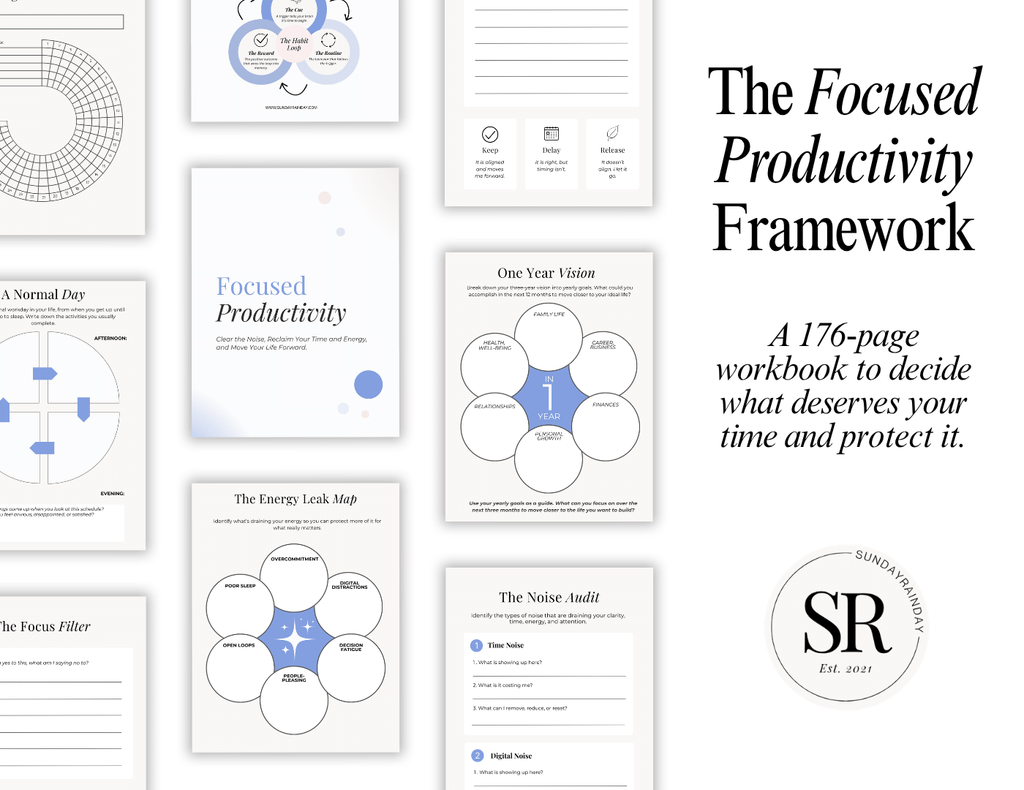
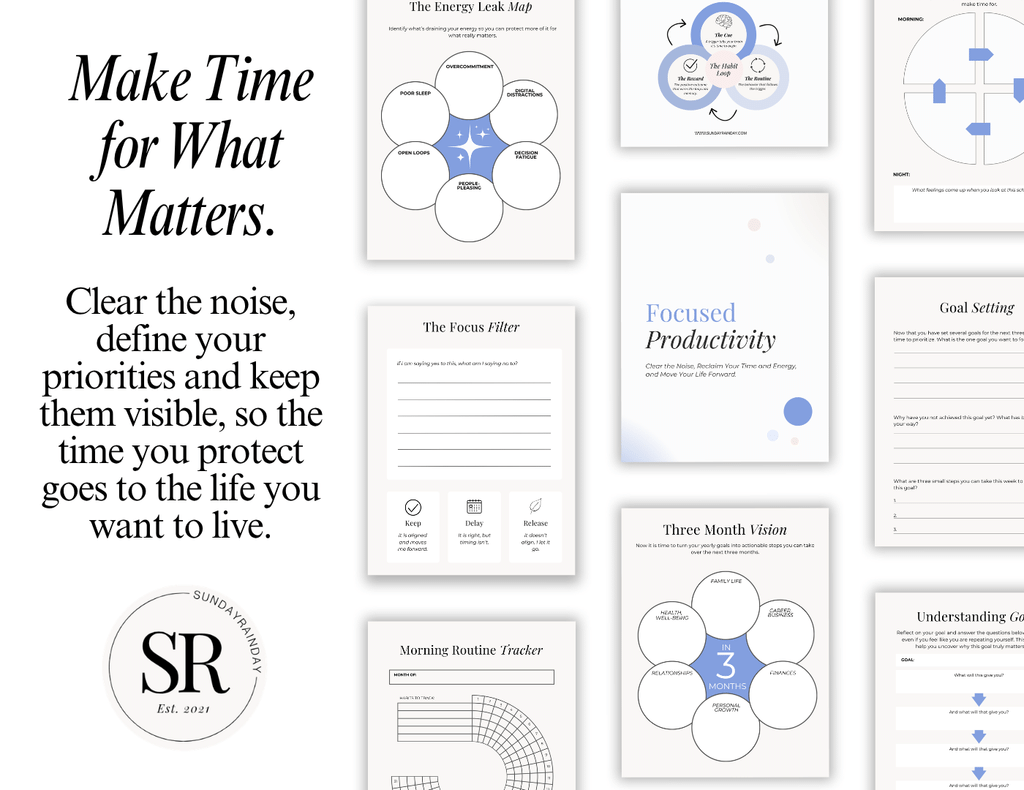
Time blocking works best when you know which priorities deserve a place in your week. The Focused Productivity Framework is a 176-page workbook that helps you find out where your time and energy really go, filter new commitments before you say yes and build a simple system that keeps your priorities visible, so the blocks in your calendar reflect the life you want.
What is time blocking?
Time blocking is a way of planning your time by giving every important activity its own block in your calendar. Instead of working from a to-do list and fitting tasks in wherever you can, you decide in advance when each thing will happen: writing from 9 to 11, emails from 11 to 11.30, a walk at lunch, dinner with friends on Thursday. The method has been popularised in recent years by the computer scientist and author Cal Newport, who plans every working day in blocks. But its real strength lies in something simpler. It turns intentions into appointments.
Time blocking vs a to-do list
A to-do list tells you what needs doing. It says nothing about when, and it treats every item as though it could be done at any moment. That’s why to-do lists tend to grow faster than they shrink. The quick, urgent tasks get done first, while the important ones slide from one day to the next.
A time-blocked calendar asks a harder question: if this matters, where does it fit? Every block you add takes up space, so you’re forced to see that your time is finite and to choose what fills it.
Read that way, a time-blocked calendar is less a rigid timetable than a map of your priorities.
A to-do list holds your intentions. Your calendar shows which ones you’ve actually made room for.
Why time blocking works
Time blocking can look like a simple scheduling habit, but it draws on two well-researched ideas about how our minds work. The first explains why deciding when you’ll do something makes you so much more likely to do it. The second explains why constantly switching between tasks leaves us drained and distracted, even when we’re working hard. Together, they show why a time-blocked day tends to feel calmer and more productive than a reactive one. And they point to something most time blocking guides miss: the same principles that protect your focus at work can protect the parts of life that work keeps crowding out.
If-then plans: why a block makes you follow through
For decades, the psychologist Peter Gollwitzer has studied a frustrating gap: the distance between what we intend to do and what we actually do. His research shows that one of the most reliable ways to close it is what he calls an implementation intention, a plan that links a specific situation to a specific action. “When it’s 7am on Tuesday, I’ll go for a run.” “When I sit down after lunch, I’ll write the proposal.”
The effect is remarkably consistent. A review of the research by Gollwitzer and his colleagues describes a meta-analysis of 94 independent studies and more than 8,000 participants, which found a medium-to-large effect of these if-then plans on reaching goals. Deciding when and where you’ll act makes the moment easier to notice and the action easier to start.
A time block is exactly that kind of plan. “Write” is a wish. “Write, Tuesday, 9 to 11” is a decision already made. When Tuesday at 9 arrives, there’s nothing left to negotiate.
Attention residue: why switching tasks wears you down
The second idea comes from the business professor Sophie Leroy, who coined the term attention residue. In her research, she found that when we move from one task to another, part of our attention tends to stay with the first one, especially when we haven’t reached a sense of closure. We’re working on the new task, but a piece of us is still thinking about the old one, and our performance suffers for it.
Think of a typical reactive day: an email, a quick message, back to the report, a call, the report again. Every switch leaves a little residue behind, and by the afternoon, our attention is scattered across a dozen half-finished things.
Time blocking reduces those switches. Grouping similar tasks together and giving each block a clear end makes it easier to finish one thing before starting the next. And when a block ends, you move on with a cleaner mind, rather than carrying fragments of the last hour into the next one.
Why a balanced life needs blocks too
Most advice about time blocking stops at work: deep focus, fewer meetings, more output. But the same logic applies to everything else you care about. An evening walk, a call with your sister, an hour for your own project or a slow Sunday morning are all intentions too, and intentions without a time tend to lose to whatever’s urgent.
This is why so many people feel their personal lives get only the leftovers. Work comes with fixed appointments and deadlines. Rest, relationships and personal goals usually don’t, so they’re the easiest things to move, postpone or quietly drop.
Giving them a block changes that. It tells you, and everyone else, that this time is already taken.
How to time block your life, not just your work
Most people start time blocking with their work calendar and try to fit the rest of their life around it. This approach turns that order around. You start with what matters most to you, give it a protected place in your week and then build everything else around it. It’s the same principle as paying yourself first with money: if you wait to see what’s left, there’s rarely anything left at all. The steps below take you from a blank week to a calendar that reflects the life you want, and they work in any calendar, digital or paper.
1. Clarity first: decide what deserves a place
Before you open your calendar, take a few minutes to name the areas of life you want your week to hold. For most people, that means some mix of work, health, relationships, rest, home and a personal goal or project. Then ask one question for each: what would a good week look like here?
Maybe it’s three runs, one dinner with friends, two evenings without screens and four hours on the book you’ve been meaning to write. Those answers are your raw material. Without them, time blocking becomes a way to organise your busyness more efficiently, rather than a way to make room for what matters.
2. Your life first: block what usually gets pushed aside
Now give those priorities a time. Put your runs, your evenings off, your calls with family and your project hours into the calendar first, as recurring blocks, before anything else has the chance to claim the space.
This is the heart of the method, and it can feel strange at first. Blocking time for a walk or a slow Saturday morning might seem excessive. But these are exactly the things that disappear when they don’t have a time. Once they’re in the calendar, they stop being vague hopes and become commitments, as real as any meeting.
3. Fixed commitments: add what can’t move
Next, add the things you can’t easily change: your working hours, the school run, regular appointments and recurring meetings. Seeing them alongside your life blocks gives you an honest picture of the week. Sometimes it’s reassuring. Sometimes it shows that the week was never going to hold everything you’d hoped, which is useful to know before Monday rather than on Thursday night.
If something has to give, decide it now, deliberately, instead of letting the week decide for you.
4. Focus blocks: protect time for your most important work
Within your working hours, block time for the work that matters most, the kind that needs your full attention. Schedule it for the time of day when your energy is usually highest. For many people, that’s the morning, before messages and meetings start to pull them in different directions.
Keep these blocks long enough to settle into the work, ideally 60 to 90 minutes, and protect them from interruptions where you can. This is where attention residue matters most. A single block of focused work, with a clear start and a clear end, will usually achieve more than a whole day of switching.
5. Batching: group the small things together
Emails, messages, admin, errands and household tasks are necessary, but they don’t need to be scattered across the day. Group them into a few dedicated blocks instead: one or two for email, one for admin, a short daily block for household tasks.
Batching does two things. It reduces the number of times you switch between different kinds of work, and it puts a natural limit on tasks that would otherwise expand to fill whatever time they’re given. Twenty minutes of tidying every evening, for example, can free up a whole weekend that used to disappear into chores.
6. Buffers: leave room for real life
No week goes exactly to plan. Meetings run over, children get sick, a task takes twice as long as you expected. A calendar packed edge to edge breaks at the first surprise, and when it does, it’s tempting to abandon the whole system.
So leave space between blocks, and keep one or two flexible blocks each week for whatever comes up. When your plan does break, simply move the blocks and carry on. Cal Newport, one of the best-known advocates of time blocking, reworks his schedule several times on difficult days. The point is to keep deciding, deliberately, where your time goes, rather than to follow the plan perfectly.
7. A weekly review: adjust what isn’t working
Once a week, ideally on Friday afternoon or Sunday evening, look back at your calendar. Which blocks did you keep? Which ones kept getting moved, and why? Did your life blocks survive the week, or did work quietly take them over again?
Then plan the next week with what you’ve learned. Over time, you’ll find the rhythm that fits your life, and your calendar will start to look less like a list of obligations and more like the week you want to live.
A calendar that reflects the life you want
Time blocking works because it turns intentions into decisions. Each block is an if-then plan. When you block your life first, giving rest, relationships, health and personal goals a protected place before work fills the week, your calendar stops being a record of everyone else’s priorities and starts reflecting your own.
Knowing which priorities deserve those blocks is often the hardest part. The Focused Productivity Framework helps you answer that question. It guides you through a noise audit, an energy leak map and a focus filter for new commitments, then helps you build a personal system that keeps your priorities visible every week, so the time you protect goes to the life you want to live.
Frequently asked questions
What is time blocking?
Time blocking is a planning method in which you give every important activity its own block of time in your calendar, instead of working from a to-do list. You decide in advance when each task, routine or personal commitment will happen.
Does time blocking really work?
Time blocking is built on well-researched principles. Planning when and where you’ll act, known as an implementation intention, has been shown to make people more likely to reach their goals, and grouping similar tasks reduces the cost of switching between them.
How do I start time blocking?
Start by deciding which areas of life matter most to you. Block time for personal priorities first, then add fixed commitments, focus blocks for important work, batched blocks for small tasks and buffers for the unexpected. Review your week every weekend.
How long should a time block be?
It depends on the task. Focused work usually benefits from blocks of 60 to 90 minutes, while email, admin or household tasks can fit into shorter blocks of 15 to 30 minutes.
Can time blocking help with work-life balance?
Yes. Blocking time for rest, relationships and personal goals before your week fills up with work gives them the same protected status as meetings and deadlines, so they’re less likely to be pushed aside.
What if I can’t stick to my time blocks?
That’s normal, especially at first. Leave buffers between blocks, move blocks when plans change rather than abandoning the system and use a weekly review to adjust your plan to how your weeks really go.
