

Daily Goals: Why Small Wins Matter More Than a Long To-Do List
A daily goal is the smallest unit of the life you’re trying to build. It’s where a five-year vision finally meets a random Tuesday afternoon, and where most of us lose the thread. We write long lists in the morning, cross off the easy things by lunch and end the day with the important task still waiting, carried over to tomorrow’s list like an unpaid bill.
Most of the time, the trouble lies in the way we set daily goals in the first place. Most daily lists are built to capture everything we need to do, when the research on motivation suggests they should be built to do something very different: to help us feel that we’re moving forward.
That feeling has a name. Psychologists call it the progress principle, and it may be the most underrated idea in personal productivity. In this article, you’ll learn what it is, why small, near-term goals are so powerful, why most daily lists are set up to fail and how to set daily goals that create real progress, with examples you can borrow from tomorrow morning.
Save this article

Protect your time for what matters
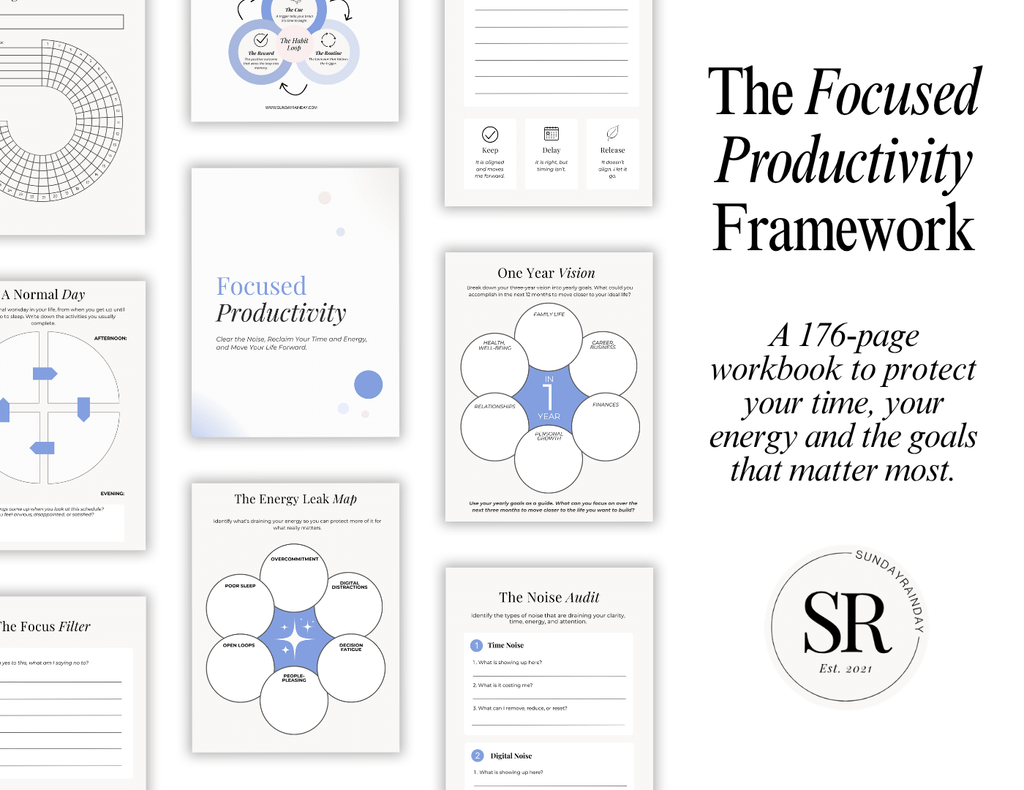
Setting the right daily goals is only half the work. The other half is protecting the time and energy to reach them. The Focused Productivity Framework is a 176-page workbook that helps you clear the noise from your days: audit where your time and energy really go, filter new commitments before you say yes and build a simple system that keeps your priorities visible every day.
What are daily goals?
Daily goals are the specific outcomes you commit to achieving today that move you closer to something that matters to you. They’re smaller than your long-term goals and more intentional than a to-do list. A to-do list holds everything that needs doing, from replying to an email to booking a dentist appointment. A daily goal is a choice about which few things, if you did them today, would make the day count. Most people only need between one and three.
Daily goals vs a to-do list
The difference matters more than it seems. A to-do list is a memory aid: it stops things from slipping through the cracks. It’s useful, but it treats every item as equal, and on a busy day it naturally fills up with the quick, urgent and visible tasks while the important ones wait.
Daily goals work the other way round. They start from where you want to go and work backwards to today. “Clear my inbox” is a task. “Draft the first section of my proposal” is a daily goal, because it moves a bigger goal forward in a way you can see.
You’ll probably still need both. But if your days are full and your bigger goals aren’t moving, it’s usually because the to-do list has quietly taken the place of daily goals.
A to-do list keeps track of your day. Daily goals give it a direction.
The progress principle: why small wins matter most
If you’ve ever finished a day feeling strangely energised after crossing off one meaningful task, you’ve experienced the progress principle. The idea comes from one of the largest studies ever carried out on motivation in everyday life, and it explains why the size of a daily goal matters far less than whether it lets you see yourself moving forward. Together with older research on near-term goals, it makes a strong case for setting smaller daily goals and paying closer attention to the progress you make. It also explains why a day of busy work can leave you flat, while a day with one real step forward can leave you lighter.
What 12,000 diary entries revealed
The Harvard Business School professor Teresa Amabile and the psychologist Steven Kramer asked 238 people working on creative projects in seven companies to fill in a short diary every working day. Over several months, they collected nearly 12,000 entries describing what happened each day and how people felt about their work.
When they analysed the diaries, one factor stood out above all the others. Of everything that could lift people’s mood, motivation and creativity at work, the most powerful was making progress in meaningful work. Recognition, incentives and support all mattered, but none of them came close to the simple experience of moving forward on something that mattered to the person doing it. And the progress didn’t have to be large. Small wins, even modest steps forward, often had a remarkably strong effect on how people felt.
Amabile and Kramer also noticed a loop. Progress made people feel better about their work, and feeling better made them more likely to make progress the next day. Setbacks worked the same way in reverse, which is why a string of days without visible progress can drain motivation so completely.
Why near-term goals work better than distant ones
The same pattern appeared decades earlier in a classic study by the psychologists Albert Bandura and Dale Schunk. In 1981, they worked with children who struggled with arithmetic and gave them 42 pages of subtraction exercises to complete over seven sessions. Some children were encouraged to aim for at least six pages per session, a near-term or “proximal” goal. Others were encouraged to finish all 42 pages by the last session, a distant goal. A third group was simply told to do as much as they could.
The results were striking. Children with session-by-session goals progressed fastest, mastered the most and grew the most confident. They had completed around 74% of the material by the fourth session, compared with about 55% for the distant-goal group. Even more surprising, around 90% of them chose to do more subtraction problems in their free time, compared with roughly 40% of the other children. Distant goals, on their own, made little measurable difference.
Near-term goals give you something to aim for today and a way to see that you’re getting there. That’s what a good daily goal is: a proximal goal that turns a distant ambition into a visible step.
Why most daily goals fail: the planning fallacy
If small wins are so powerful, why do so many of us end the day feeling behind? Part of the answer is a bias the psychologists Daniel Kahneman and Amos Tversky called the planning fallacy: our tendency to underestimate how long things will take, even when we’ve been wrong many times before.
In one well-known study, students were asked to predict when they would finish their final-year thesis. On average, they estimated around 34 days. Even their “everything goes wrong” estimate averaged under 49 days. In reality, they took an average of 55 days, and only around 30% finished within the time they’d predicted.
We do the same with our days. We plan for an ideal morning with no interruptions, no extra meetings and no tired afternoons, then fill the list accordingly. When reality arrives, the list wins and we lose, and the day that could have delivered one clear win ends with a feeling of failure instead. That feeling is the opposite of what the progress principle needs.
How to set daily goals that create real progress
Put the research together and a clear approach emerges. Good daily goals are connected to something bigger, few in number, specific enough to finish, realistic about time and noticed once they’re done. None of this needs a complicated system. It needs ten minutes, either the evening before or first thing in the morning, and a willingness to choose less so that you can finish more. The six steps below take you through it, in the order that tends to work best.
1. Start from a bigger goal
A daily goal only creates a sense of progress if it moves something that matters. So before you decide what today is for, look one level up. What are you working towards this month? What would make this week a good one? Then ask what you could do today that would move that forward.
This is the step most daily lists skip. Without it, your days fill up with whatever feels most urgent, and urgent things are rarely the ones that change your life. With it, even a small task carries weight, because you know exactly where it’s leading.
2. Choose one to three daily goals
The planning fallacy means you’ll almost always overestimate what a day can hold. So choose fewer goals than feels comfortable. One is often enough on a busy day, and three is a generous maximum. If you like, choose one anchor goal: the single thing that would make the day feel worthwhile even if nothing else got done.
Everything else can stay on your to-do list. The point is to separate the few things that create progress from the many things that simply keep life running.
3. Make each goal specific and finishable
Bandura and Schunk’s research shows that near-term goals work best when you can clearly see whether you’ve reached them. A vague goal like “work on my business” never quite ends, so it never gives you the satisfaction of finishing. A specific one like “write the About page for my website” does.
For each daily goal, define what “done” looks like. Make it an outcome you could point to at the end of the day, rather than an activity you could keep doing forever. If a goal is too big to finish in a day, take the next piece of it that you can.
4. Plan for the planning fallacy
Once you’ve chosen your goals, estimate how long each one will take, then add a buffer. Research on the planning fallacy suggests that breaking a task into its parts before estimating can help, because it forces you to notice the steps you’d otherwise forget. If writing a proposal involves finding last year’s figures, checking two emails and formatting the document, those steps take time too.
Then look at the rest of your day. Meetings, errands, meals and the simple friction of switching between tasks all take time. If your goals only fit into a perfect day, they won’t fit into a real one.
5. Give your most important goal a protected place in the day
A daily goal without a time is a wish. Decide when you’ll work on your anchor goal and put it in your calendar, ideally at the time of day when your energy and focus are usually highest. For many people that’s the morning, before messages and other people’s priorities start to fill the day.
Treat that block as an appointment with yourself. You don’t need hours. Even 45 focused minutes on the right goal can produce the kind of visible progress that makes the rest of the day feel different.
6. End the day by noticing your progress
This is the step that turns the progress principle from a research finding into a daily habit. Amabile and Kramer found that progress affects us most when we notice it, and that many people overlook their small wins entirely. So take two minutes at the end of the day to write down what moved forward.
A simple progress note can answer three questions: What did I move forward today? What got in the way? What’s tomorrow’s most important goal? Over time, these notes become a record of steady progress, and they’re remarkably useful on the days when it feels as though nothing is moving.
Daily goals examples
To make this concrete, here are examples of daily goals across different areas of life. In each case, the first column shows a typical to-do item and the second shows a daily goal that creates visible progress.
Notice what the daily goals have in common. They’re specific, they can be finished in a single day and each one moves a bigger goal forward in a way you could point to by the evening.
| Area of life | A typical to-do item | A daily goal that creates progress |
|---|---|---|
| Career | Work on my presentation | Finish the outline and the first five slides |
| Health | Exercise more | Go for a 30-minute walk before work |
| Finances | Sort out my budget | List every subscription and cancel the ones I don’t use |
| Personal growth | Read more | Read one chapter during my lunch break |
| Relationships | Spend more time with friends | Call my sister and plan a date for dinner this month |
| Creative project | Write my book | Write 500 words of chapter three |
| Home | Declutter the house | Clear and reorganise the kitchen drawer |
| Learning | Practise Spanish | Complete one lesson and learn ten new words |
Small daily wins, big direction
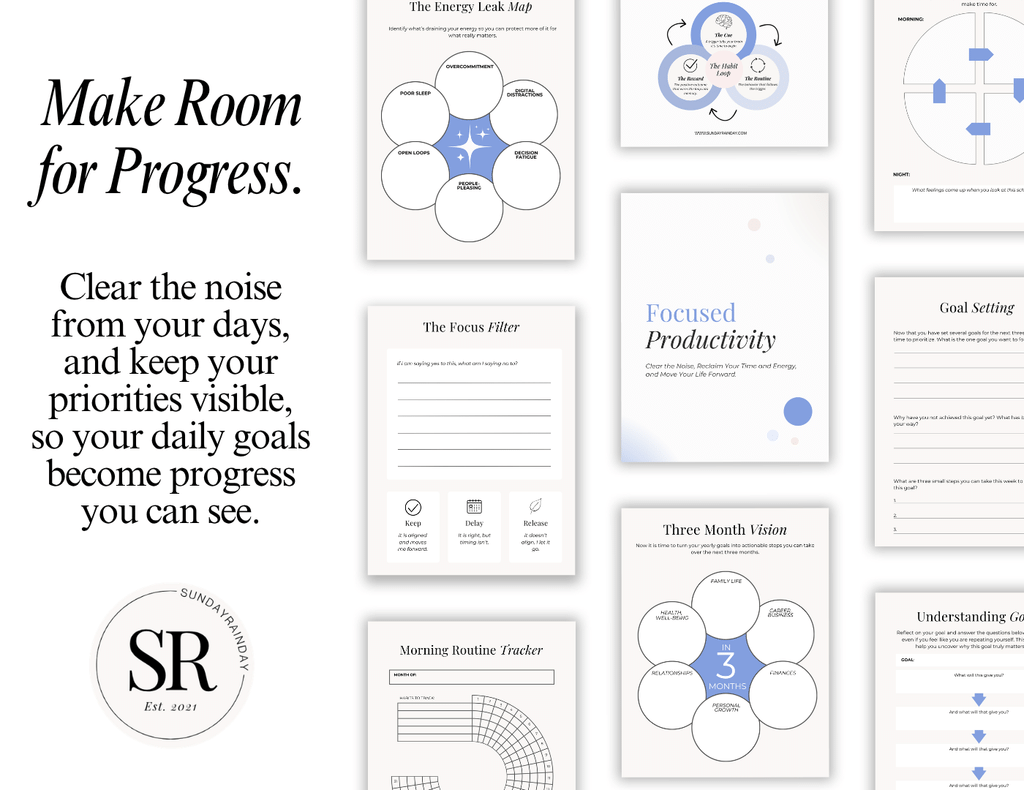
Daily goals work best when they’re designed for progress rather than for capturing everything you need to do. Even the best daily goals struggle to survive a day full of interruptions, unnecessary commitments and other people’s priorities. That’s where the Focused Productivity Framework makes all the difference. It helps you find out where your time and energy are really going, decide which commitments deserve a place in your life and build a simple personal system that keeps your priorities visible, so that the goals you set each morning have the space they need to become the progress you see each evening.
Frequently asked questions
What are daily goals?
Daily goals are the specific outcomes you commit to achieving today that move you closer to a bigger goal. Unlike a to-do list, which captures everything that needs doing, daily goals focus on the few things that would make the day count.
How many daily goals should I set?
Most people do best with one to three daily goals. Because we tend to underestimate how long tasks take, setting fewer goals makes it more likely you’ll finish them and feel the sense of progress that keeps you motivated.
What are some examples of daily goals?
Examples include finishing the outline of a presentation, going for a 30-minute walk before work, reading one chapter of a book, writing 500 words of a creative project or cancelling unused subscriptions. Good daily goals are specific and can be finished in a single day.
What is the progress principle?
The progress principle is the finding, from research by Teresa Amabile and Steven Kramer, that making progress in meaningful work is one of the most powerful boosts to motivation and mood, even when the progress is small.
Should I set daily goals the night before or in the morning?
Either works. Setting them the night before means you start the day with a clear focus, while setting them in the morning lets you account for how you feel and what has changed. What matters most is that you choose them deliberately rather than letting the day decide for you.
What should I do if I don’t finish my daily goals?
Look at why. If it happens often, you’re probably setting too many goals or underestimating how long they take, a common bias called the planning fallacy. Choose fewer, smaller goals and add a buffer to your estimates.
