

The 5 Stages of Change: How Real Change Happens in Your Life
In the late 1970s, two psychologists at the University of Rhode Island, James Prochaska and Carlo DiClemente, set out to answer a deceptively simple question: how do people change when nobody is making them? They studied smokers who had managed to quit on their own, expecting to find a single turning point in each story. What they found instead was a sequence. Every person who changed had moved through the same recognisable stages, from not seeing a problem at all, to thinking about it, to planning, acting and, finally, holding on. That sequence became known as the stages of change, and it is now one of the most widely used models of behaviour change in psychology.
The model was born in research on addiction, but it describes something most of us have lived through. The relationship you knew was over long before you left. The job you outgrew a full year before you updated your CV. The habit you promised to change every January, and the January it finally stuck. From the outside, change looks like a decision made on a Tuesday. From the inside, it is a slow, uneven process that often feels like being stuck right up until the moment it doesn’t.
This article walks you through the five stages of change, what each one feels like in everyday life, the signs that show you where you are now, and what helps you move to the next. Knowing your stage won’t make change effortless. It will stop you from using the wrong tools at the wrong time, which is where most attempts at change quietly fall apart.
Save this article

Get clear on who you’re becoming
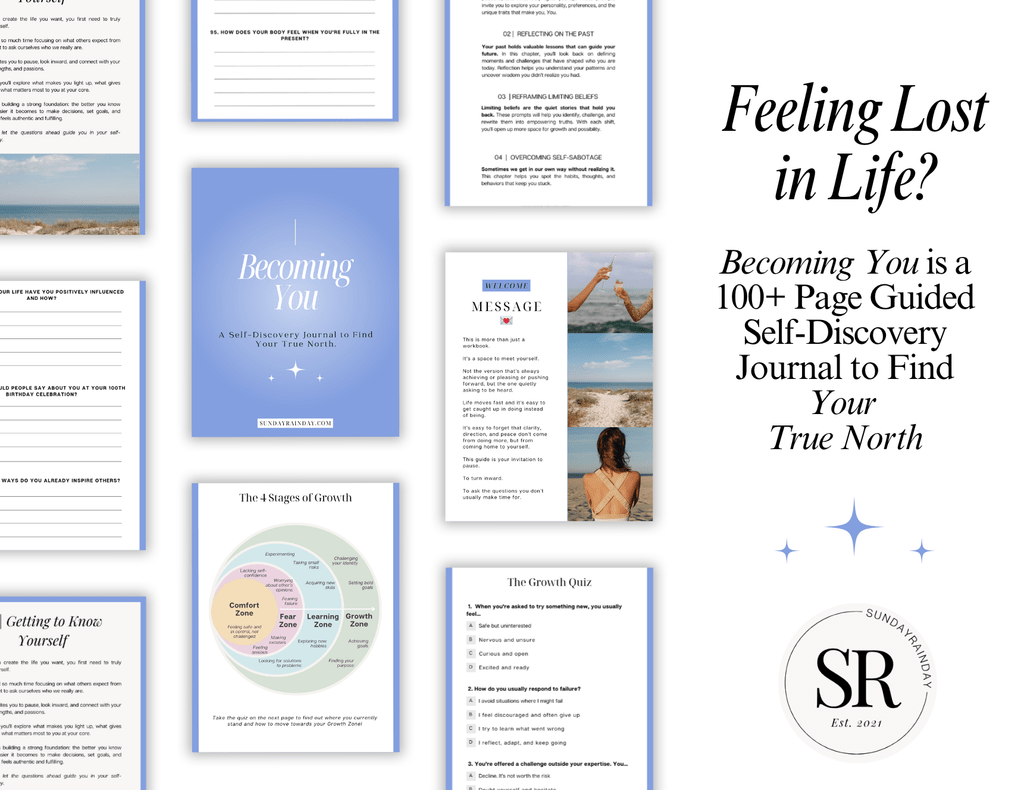
When you feel stuck, what you are usually missing is clarity: a clear sense of what you value, what you want and what no longer fits. Becoming You is a 103-page self-discovery workbook with 135 guided prompts designed to help you answer those questions on paper, one section at a time. It is the kind of work that moves you from thinking about change to being ready for it.
What are the stages of change?
The stages of change are the five steps people move through when they change a behaviour: precontemplation, contemplation, preparation, action and maintenance. They form the core of the transtheoretical model, which Prochaska and DiClemente first described in a 1983 study of smokers and refined over the following decade. The name sounds technical, but the idea behind it is generous. Rather than choose one school of therapy, its authors looked at what people do across many of them when change works. The result is a map of readiness: a way of seeing where you are, so you can stop expecting yourself to be somewhere else.
Where the model comes from
The original research asked smokers to describe how they had tried to quit, what they did at each point and what made the difference. The patterns were consistent enough to sort people into stages, and each stage turned out to call for different strategies. People who were still weighing up whether to quit needed something very different from people who had already stopped and were trying not to start again.
In 1992, Prochaska, DiClemente and John Norcross published a landmark paper in American Psychologist, In Search of How People Change, which set out the five stages we use today. One of its most important findings was that people rarely move through the stages in a straight line. They typically cycle through them several times before a change holds for good. The authors described this movement as a spiral: you may slip back, but you rarely return to the very beginning.
Why it applies to your everyday life
Since then, the model has been applied to exercise, eating habits, stress management, sun protection and dozens of other behaviours. What it measures, readiness, is not specific to any one of them. Whether you want to leave a job, set boundaries with someone you love, build a morning routine or finally start the project you keep talking about, you are somewhere on the same continuum.
A study on New Year’s resolutions shows how much readiness matters. In 2002, Norcross and his colleagues followed 159 people who made resolutions and 123 people who wanted to change the same kinds of behaviour but did not make a resolution. Six months later, 46% of the resolvers were still succeeding, compared with just 4% of the others. The strongest predictors of success, measured before 1 January, were readiness to change, confidence and the skills to follow through. Readiness, more than desire, made the difference.
Knowing which stage you are in matters more than how motivated you feel today.
The two forces that move you between stages
Two ideas sit at the heart of the model, and both are worth understanding before you look at the stages themselves.
The first is decisional balance: the inner weighing of the pros and cons of changing. In the early stages, the reasons to stay the same feel heavier. The comfort of the familiar, the fear of losing what you have and the effort involved all weigh against change. As you move forward, the scales tip. The reasons to change start to outweigh the reasons not to, and that shift often happens before you take a single visible step.
The second is self-efficacy, a concept from the psychologist Albert Bandura: your confidence that you can carry out a change, even in difficult moments. It is the difference between “I should” and “I can”. Self-efficacy tends to be low in the early stages and grows with every small success, which is why small, early wins matter so much.
The stages of change at a glance
| Stage | What it sounds like | Typical time frame | What helps most |
|---|---|---|---|
| Precontemplation | “Nothing needs to change.” | No plans to change in the next six months | Awareness and honest information |
| Contemplation | “I know something has to change, but…” | Thinking about changing within six months | Reflection and weighing the pros and cons |
| Preparation | “I’m going to do this.” | Planning to act within the next month | A clear plan and a firm commitment |
| Action | “I’m doing it.” | Visible change for less than six months | Structure, support and rewards |
| Maintenance | “This is who I am now.” | Change sustained for six months or more | Protecting the change and planning for setbacks |
The 5 stages of change and how to move through them
Each stage below comes with the signs that tend to show up when you are in it and the strategies that help you move to the next one. The research behind the model identifies a set of “processes of change”, the inner and outer work people do to move forward, and it found that different processes work best at different stages. Reflection helps early on, while structure and support matter more later. Read through all five, then come back to the one that sounds most like you right now. Most people find they are further along than they thought in some areas of life and further behind in others.
1. Precontemplation: “Nothing needs to change”
Precontemplation is the stage before you see a problem, or before you are willing to look at one. You may have no intention of changing in the next six months, and if someone suggests it, you are likely to feel defensive, misunderstood or simply tired of hearing about it. Sometimes this is because you are unaware of how much something is costing you. Sometimes it is because you have tried to change before, failed, and quietly decided it is not worth the disappointment of trying again.
This stage can last for years, and it is easy to judge from the outside. From the inside, it often feels like reasonableness: things are fine, everyone feels this way, now is not the time.
Signs you may be in precontemplation:
- You explain away the same frustration every time it comes up.
- Other people mention a problem you don’t recognise, or don’t want to.
- You feel a flicker of discomfort when you hear about someone else’s change, then move on quickly.
- You avoid information, conversations or situations that might make you think too hard about it.
How to move to contemplation:
The processes that help most at this stage are about awareness. Psychologists call them consciousness-raising and dramatic relief: noticing the facts of your situation and allowing yourself to feel something about them. Pay attention to the moments of discomfort you usually brush past and write them down when they happen. Ask yourself what your life would look like in five years if nothing changed, and notice how that answer feels. You don’t need to decide anything yet. The goal is simply to stop looking away.
2. Contemplation: “I know something has to change, but…”
Contemplation begins when denial ends. You can see the problem now, and you are seriously thinking about doing something about it within the next six months. You are also deeply ambivalent. Part of you wants change, and part of you wants things to stay exactly as they are, and both parts are making good arguments.
This is the stage where most people get stuck, sometimes for a very long time. People can stay in contemplation for months or even years, always about to change but never quite starting. Clinicians describe it as an approach-avoidance conflict: the closer you get to change, the more you notice what you will lose. If you have ever felt that you have outgrown your life but could not yet say what should replace it, you know this stage well.
Signs you may be in contemplation:
- You think about your choices more than you used to, and see patterns you used to miss.
- You have stopped pretending everything is fine, at least to yourself.
- Peace has started to matter more to you than excitement, approval or keeping up appearances.
- You want more time alone to think, and you are more comfortable with your own company than before.
- You talk about change often, but your daily life looks the same.
- You make lists of pros and cons and end up exactly where you started.
How to move to preparation:
At this stage, the most useful process is self-reevaluation: looking honestly at who you are now and who you would become if you changed. Write a description of the person you would be if this change were already part of your life, then compare it with the person you are today. Make a decisional balance sheet with four boxes: the benefits of changing, the costs of changing, the benefits of staying the same and the costs of staying the same. Most people only ever fill in two of these boxes. The costs of staying the same are often the ones that tip the scales.
It also helps to get clear on what you actually want, as opposed to what you want to get away from. Moving away from something can start a change, but moving towards something is what sustains it.
Ambivalence is a normal part of change, and a sign you are taking it seriously.
3. Preparation: “I’m going to do this”
Preparation is the stage of commitment. You intend to act within the next month, and you have often already taken small steps: researching options, talking to someone you trust, saving money, clearing your diary or testing a new routine for a few days. The scales have tipped, and the question has shifted from whether to change to how.
This stage was added to the model after the earliest research, because the gap between thinking about change and doing it turned out to be a stage in itself. Many attempts at change fail because people jump from contemplation straight into action, fuelled by a burst of motivation, without a plan for what happens when that motivation fades.
Signs you may be in preparation:
- You know what you want, and you can describe it in a sentence or two.
- You have started removing distractions and saying no to things that pull you away from it.
- You feel hopeful, sometimes for the first time in a while.
- You have told at least one person what you are planning.
- You have taken small, low-risk steps to test the change.
How to move to action:
The key process here is what the model calls self-liberation: making a firm commitment to change and believing you can follow through. Choose a start date and write it down. Break the change into specific first actions, so you know exactly what you will do on day one, day two and the first difficult day. Decide in advance what you will do when an obstacle appears, using a simple “if this happens, then I will do that” plan. Then tell someone. A commitment made out loud is harder to quietly abandon.
4. Action: “I’m doing it”
Action is the stage most people picture when they think of change. You have made visible changes to your behaviour or your life, and you are working hard to keep them going. In the model, action covers roughly the first six months after a change begins. It is the busiest stage, and also the most fragile.
The early weeks of action often feel exciting. The difficulty usually arrives later, when the novelty wears off, the old habits call and life gets in the way. Research on addictive behaviours suggests the first three to six months after a change carry the highest risk of slipping back, and the same pattern appears with everyday habits.
Signs you may be in action:
- Your days look different from the way they did a few months ago.
- You have to make a conscious effort to keep the change going.
- You notice old triggers more sharply than before.
- Other people have started to notice the change too.
How to move to maintenance:
The processes that matter most here are practical. Stimulus control means changing your environment so the old behaviour is harder and the new one is easier: putting your phone in another room, keeping your running shoes by the door, removing the apps or plans that pull you back. Counterconditioning means replacing the old behaviour with a healthier one in the moments it would normally appear. Reinforcement management means rewarding yourself for progress, so the change feels worth keeping. And helping relationships means asking for support from people who want to see you succeed. Use as many of these as you can. Willpower alone rarely carries a change through its first six months.
5. Maintenance: “This is who I am now”
Maintenance begins once a change has lasted around six months, and it can continue for years. The new behaviour is no longer a project. It has become part of how you live. You still need to protect it, especially during stressful periods, but it takes far less effort than it did at the start.
Some versions of the model include a sixth stage, termination, in which there is no temptation to return to the old way at all. In practice, it is rarely reached for deeply ingrained habits, so most people are better served by thinking of maintenance as a long, steady stage rather than a finish line.
Signs you may be in maintenance:
- You rarely think about the old behaviour, and when you do, it holds less pull.
- The change feels like part of your identity rather than a rule you are following.
- You feel confident you could handle a difficult week without slipping.
- You have started to look ahead to what you want to change next.
How to stay in maintenance:
Plan for the situations that might pull you back: holidays, busy seasons, emotional lows and big life transitions. Keep the environment you built during the action stage, even when you feel you no longer need it. And let the change shape how you see yourself. People who describe a change as part of who they are, rather than something they are trying to do, tend to find it easier to protect.
Relapse is part of the cycle
Almost everyone who changes something important slips back at some point. In the stages of change model, relapse is not a stage of its own. It is a return from action or maintenance to an earlier stage, and it is so common that the model treats it as a normal part of change. Prochaska, DiClemente and Norcross found that people typically cycle through the stages several times before a change holds. A clinical summary of the model in StatPearls puts the average at three to four attempts before long-term maintenance.
Why slipping back is not starting over
The most hopeful part of the research is where people land when they relapse. According to the same StatPearls summary, around 85% of people who relapse return to contemplation or preparation, not to the very beginning. Only around 15% go all the way back to precontemplation. In other words, most people who slip back are still willing to change, and they usually know far more about what works for them than they did the first time.
This is why the model describes change as a spiral rather than a straight line. Each time you move through the stages, you start from a higher point. You know your triggers. You know which strategies helped and which ones didn’t. You know that the difficult weeks pass.
How to respond to a setback
When you slip, resist the urge to judge the whole attempt by its worst moment. A single lapse, a skipped workout or an old pattern on a hard day, is not the same as a full return to where you started. Treat it as information. Ask what happened just before it: the place, the people, the time of day, the feeling. Then decide which stage you are in now and use the strategies for that stage. If you are back in contemplation, reflect. If you are back in preparation, make a new plan, informed by what you have just learned.
A relapse is a return to an earlier stage, never a return to zero.
What the stages of change can and can’t tell you
The stages of change model is one of the most influential ideas in health psychology, and also one of the most debated. Some researchers, most notably the psychologist Robert West, have argued that the boundaries between stages are arbitrary, that the time frames are too rigid and that real people move between stages in messier ways than the model suggests. Reviews of programmes built around the stages have also found mixed results, particularly for quitting smoking. These are fair criticisms, and they are worth keeping in mind.
Used as a strict diagnosis, the model has limits. Used as a lens, it remains one of the most helpful ways to understand your own resistance to change. It reminds you that readiness builds gradually, that the right strategy depends on where you are and that feeling stuck is often a stage rather than a verdict.
Every stage of change counts
Real change rarely happens in a single moment. It moves through five stages: precontemplation, when you are not yet ready to see the problem; contemplation, when you see it and feel pulled in two directions; preparation, when you commit and make a plan; action, when your life begins to look different; and maintenance, when the change becomes part of who you are. Each stage has its own work, and each one counts as progress, even the ones that look like standing still from the outside.
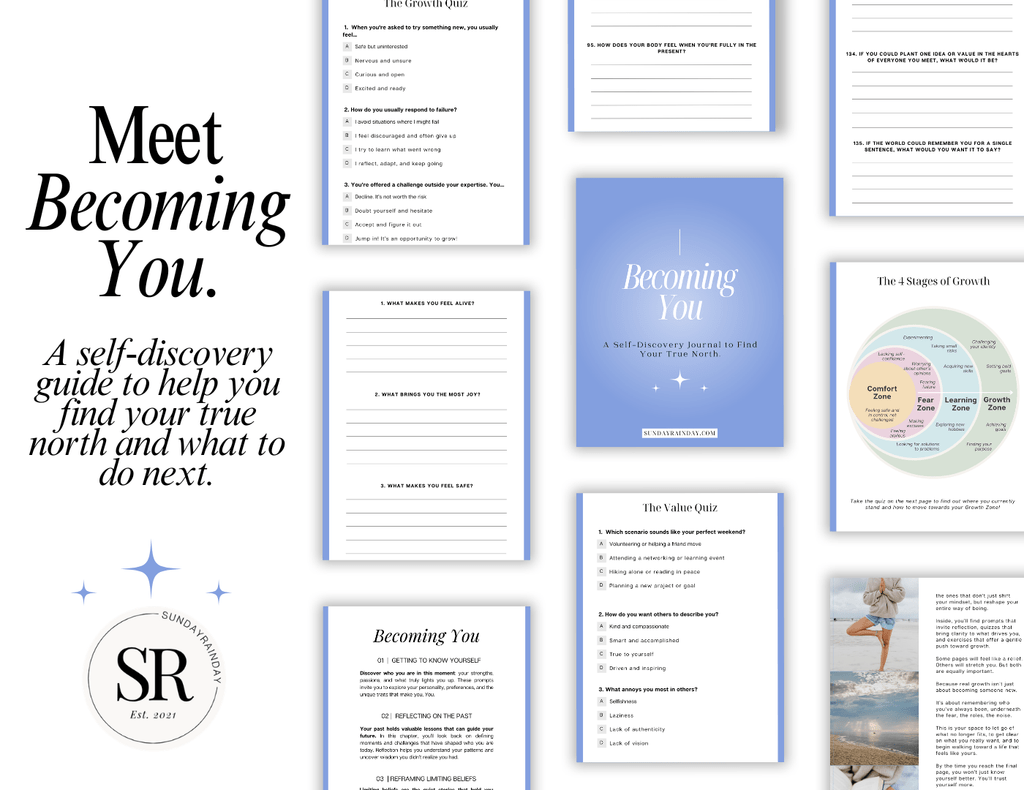
If you have recognised yourself in contemplation, you are in good company. It is the stage where most people wait the longest, usually because they know they want something different without yet knowing what it is. The way forward is clarity: understanding what you value, what you want and who you are becoming. That is exactly what Becoming You was designed for. It takes you through four steps: understanding where you are now, identifying what no longer fits, reconnecting with what matters and turning that clarity into direction. Its 135 prompts help you turn “something has to change” into a clear next step, so you can move into preparation with confidence.
Frequently asked questions
What are the 5 stages of change?
The five stages of change are precontemplation, contemplation, preparation, action and maintenance. They describe how people move from not seeing a problem, to thinking about change, to planning, acting and sustaining a new behaviour over time.
How long does each stage of change last?
There is no fixed length. As a guide, contemplation means intending to change within six months, preparation means intending to act within the next month, action covers roughly the first six months of change and maintenance begins after that. Many people stay in contemplation for much longer.
Is relapse a stage of change?
No. Relapse is a return from action or maintenance to an earlier stage. Most people who relapse go back to contemplation or preparation rather than precontemplation, and they usually move forward again with more experience.
How do I know which stage of change I’m in?
Ask yourself two questions: do you intend to change, and have you already started? If you don’t see a reason to change, you are likely in precontemplation. If you intend to change but haven’t started, you are in contemplation or preparation. If you have already changed, you are in action or maintenance, depending on how long the change has lasted.
Can you skip a stage of change?
People can move quickly through a stage, but skipping one entirely tends to backfire. Jumping from contemplation straight into action without preparation is one of the most common reasons changes don’t last.
Can you be in different stages for different parts of your life?
Yes. The stages apply to specific behaviours, not to you as a whole person. You might be in maintenance with your exercise habits, in contemplation about your career and in precontemplation about your screen time, all at the same time.
