

25 Things to Do in January to Start a New Life
January is the best time of the year to start fresh, and a lot of that comes down to company. For a few weeks, almost everyone around you is doing the same thing. Your colleagues come back from the holidays with plans, your friends are talking about what they’d like to change, and nobody finds it strange if you want to do things differently. At any other time of year, you’d have to create that feeling on your own.
There’s also something freeing about a new year. Whatever went wrong in the last one, whether it was the goals you dropped in February or the habits that you failed to build, now belongs to a year that’s over. You get to keep what you learned and leave the rest behind, and that makes it much easier to believe that this time can go differently.
This list of 25 things to do in January is here to help you make the most of that. It’s divided into five parts, and each one looks after a different side of your life. You don’t have to do all 25, and you don’t have to finish them in a month. Read through the five parts, begin with the one your life is asking for most, and let the others follow when you’re ready.
Save this article

Your fresh start needs more than a checklist
January arrives with plenty of motivation and high hopes. Your ideas feel clear, and change feels possible. Whether any of it lasts into February depends on having a structure that can carry it once the motivation fades and ordinary life takes over again.
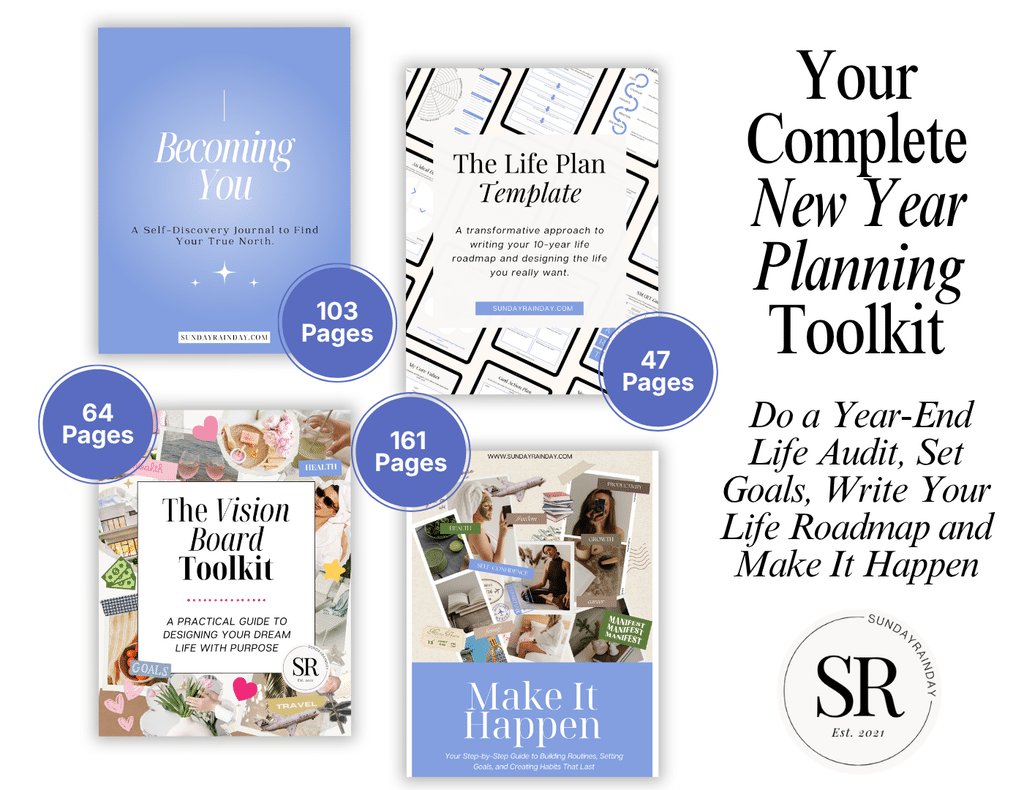
That’s why I created the New Year Planning Bundle, a complete system for turning that early motivation into a clear plan you can follow well beyond January. This article gives you 25 meaningful ways to start fresh, and the bundle is there to help you act on them and stay consistent for long enough to see your life change.
Why January is such a good time to start a new life
The pull you feel in January is real, and researchers have measured it. Hengchen Dai, Katherine Milkman and Jason Riis looked at when people search for diets, visit the gym and commit to new goals, and they found a jump at every kind of beginning: a new week, a new month, a birthday and, most of all, a new year. They called it the fresh start effect.
Their explanation is that a landmark date lets you draw a line behind you. Whatever you didn’t manage belongs to last year’s version of you, and the person standing on this side of the line feels free to try again. That’s a kind and useful trick of the mind, and there’s no reason to be cynical about it.
The catch is that a date gives you a beginning and nothing else. The motivation arrives for free on the first of January and has usually left by the first of February, and what remains is whatever you built while you had it. So the 25 things on this list were chosen for what they leave behind: a clear idea of what you want, a few steady habits, and a home, a phone and a bank account that are no longer getting in your way.
25 things to do in January to start fresh
The list is in five parts, and the order is deliberate. You begin by working out what you want, because everything else depends on it. Then come your habits, your body and mind, your space, and finally your growth and your money.
You can read it from top to bottom or go straight to the part you need most. If you finish one or two things from each part by the end of the month, you’ll have done more for your year than most resolutions ever do.
Part 1: Know where you stand and what you want
It’s tempting to begin with the wardrobe or a gym membership, because those are things you can see. But a goal chosen in ten minutes on New Year’s Eve is usually a goal you think you ought to have, and those are the first to be dropped.
The first three things on the list are about you, and they come before anything else for that reason. Give them a quiet evening or two in the first week of January. They’ll tell you which of the other twenty-two are worth your time.
1. Do a life audit
A life audit shows you what’s working in your life and what isn’t, so that you put your effort where it matters. My favourite tool for it is the Wheel of Life, which looks at eight areas:
- Career
- Finance
- Personal growth
- Health
- Family / friends
- Social life
- Self-image
- Environment

Rate each area from 0, not satisfied at all, to 10, very satisfied. Be honest and be kind to yourself while you score, and for every area that isn’t a 10, ask yourself what would have to change for it to become one. The two or three lowest scores are where this year’s goals will come from.
Related read: How to Do a Life Audit with the Wheel of Life
2. Set Personal Goals
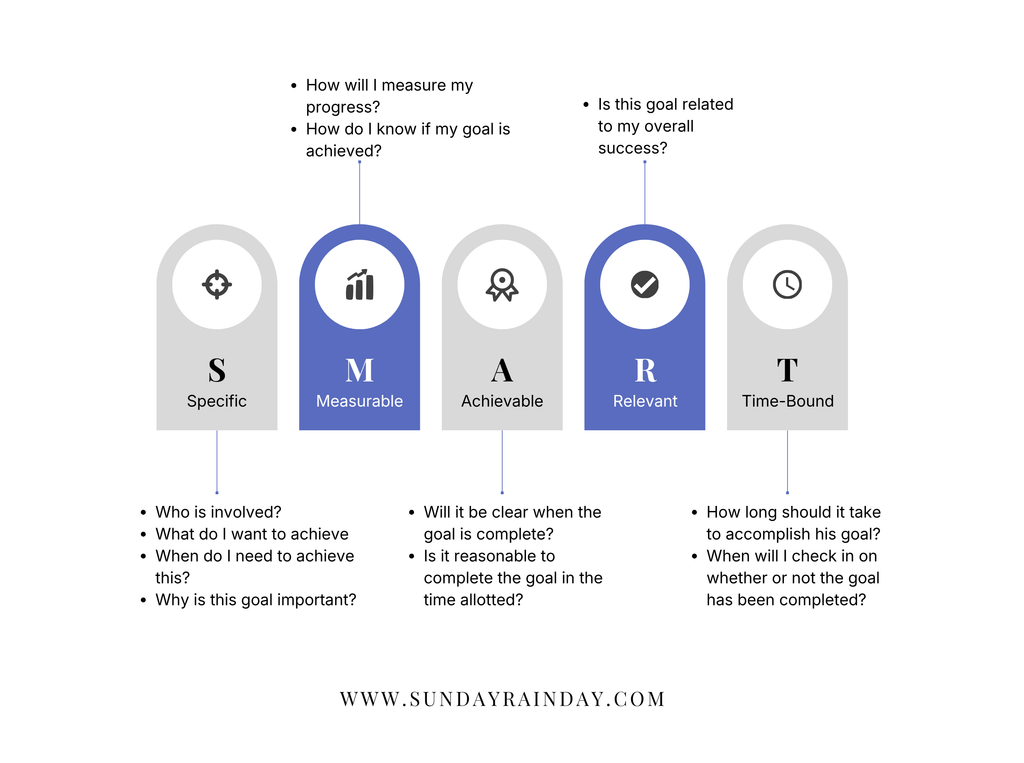
Once you know which areas need attention, turn each one into a goal you could tick off. “Read more” is a wish. “Read twelve books this year” is a goal, and it follows the SMART rule of being specific, measurable, attainable, realistic and tied to a date.
Then break it down until it stops looking big. Twelve books a year is one a month, and one a month is about ten pages a day, which is fifteen minutes before bed. Nearly every goal that feels out of reach in January turns out to have a small daily version like that.
Related read: How to Set Goals You Will Achieve
3. Focus on yourself
Making yourself a priority is what makes everything else on this list possible, and there’s nothing selfish about it. You can’t keep up any change for long if you’re running on empty.
In practice it comes down to two things. Plan your rest the way you plan your work, with real time in your diary that nobody else can book. And practise saying no to what doesn’t fit the goals you’ve just set. Every yes you give away in January is an hour your plan won’t get.
Part 2: Build the habits that will carry your year
Goals tell you where you’re going, and habits are how you get there on the days you don’t feel like it. The psychologist Wendy Wood, who has studied habits for about thirty years, estimates that around 43 per cent of what we do each day is repeated in the same place, usually while we’re thinking about something else.
Her research also explains why willpower so often lets us down. A habit is tied to its surroundings: the sofa, the phone on the bedside table, the biscuit tin at eye level. People who seem very disciplined are mostly people who have arranged their days so that the good choice is the easy one. The next four things on the list use that idea.
4. Break bad habits
A bad habit is easier to break when you remove whatever sets it off than when you try to resist it. If you scroll in bed, charge your phone in the hallway. If you snack while you cook, put the biscuits on the highest shelf and a bowl of fruit where they used to be.
It also helps to put something in the habit’s place, because an empty space tends to fill up with the old behaviour. Choose one habit to work on this month, and decide what you’ll do at the moment you’d normally reach for it.
5. Get out of your comfort zone
If last year felt flat, it may be because very little in it was new. Comfort is pleasant, but nothing in a comfortable week asks you to become any different from who you already are.
You don’t have to turn your life upside down. Plan one thing a month that makes you slightly nervous, such as a class where you know nobody, a conversation you’ve been postponing or a trip on your own. Put January’s in your diary now, while you still have the nerve.
6. Implement a morning and night routine
A morning routine gives your goals a fixed place in the day, before work and other people have had a chance to claim it. Even twenty minutes is enough for the reading, the writing or the exercise you never get to in the evening.
A night routine does the opposite job. It closes the day, gets tomorrow ready and tells your body that it’s time to slow down. Keep both of them short to begin with, three or four steps each, and add to them once they feel natural.
Related read: The Morning Routine Checklist You Write Yourself
7. Follow a new self-care routine
Self-care has come to mean baths and face masks, and those are lovely, but the idea is wider than that. It covers anything that protects your health and your peace of mind, which includes eating properly, sleeping enough, moving, resting and asking for help when you need it.
If you mean to change a lot this year, you’ll need ways to recover. Choose two or three things that reliably leave you feeling better, whether that’s a walk, an hour with a book or a phone call with a friend, and give them a regular slot in your week.
Part 3: Look after your body and mind
January is when most of us decide to overhaul how we eat, move and sleep, all at once and usually to an extreme. It feels like commitment. Three weeks later it feels like punishment, and the old ways come back with interest.
The changes that last are smaller and less dramatic. Start with sleep if you can, because it makes every other change easier, and make one adjustment at a time in the other areas. Your aim for January is to feel a little better each week.
Related read: 12 High-Impact Habits That Shape Everything Else
8. Change your eating habits
The easiest way to eat better is to add before you take away. Add a vegetable to every dinner, a glass of water to every meal and a proper breakfast to your mornings. Adding feels generous, where cutting things out feels like a punishment, and it’s far easier to keep up.
Make one change, keep it for two weeks and then choose the next. By the end of the month you’ll have two new habits that are still standing, which is more than most January diets can claim.
9. Give meal planning or meal prep a try
Most poor food choices are made at seven in the evening in front of an empty fridge. Meal planning takes that moment away. On Sunday, decide on five dinners for the week, write one shopping list and buy only what’s on it. You’ll eat better, spend less and throw less away.
Meal prep goes one step further, since you cook several meals in one session. If that sounds like too much, start by cooking double portions twice a week and keeping the second half for another day.
10. Create a workout plan
We all need to move, whatever our goals are, and the best plan is one you’ll still be following in February. Choose something you don’t dread, book three sessions a week in your diary as if they were appointments and decide in advance where and when each one happens.
If you’ve been away from exercise for a while, begin with far less than you think you should. Ten minutes done three times a week will take you further than an hour done once and never again.
11. Be kind to your mind
Some days this year will be harder than others, and how you speak to yourself on those days decides whether you carry on. Being hard on yourself can feel like discipline, but it usually just makes you want to stop.
Give your mind some care of its own. Ten quiet minutes in the morning, a few lines in a journal at night or a short meditation will all help you notice your thoughts before they run the day. And when you miss a day, talk to yourself the way you’d talk to a friend who had missed one.
12. Make sleep your priority
Nothing on this list works well when you’re exhausted. The US Centers for Disease Control and Prevention says that adults need seven or more hours of sleep a night, and being used to less isn’t the same as being rested.
A few habits make the biggest difference:
- Go to bed and get up at the same times every day, weekends included.
- Put your phone and laptop away at least thirty minutes before bed.
- Skip caffeine in the afternoon and evening.
- Keep your bedroom quiet, cool and dark.
- Read for twenty minutes before you turn out the light.
Why most January fresh starts fade by February
January motivation is real, but it’s temporary. Most people don’t forget their goals in February. They lose the energy that carried them through the first few weeks, and without a structure their goals scatter, their habits become patchy and the fresh start quietly disappears.
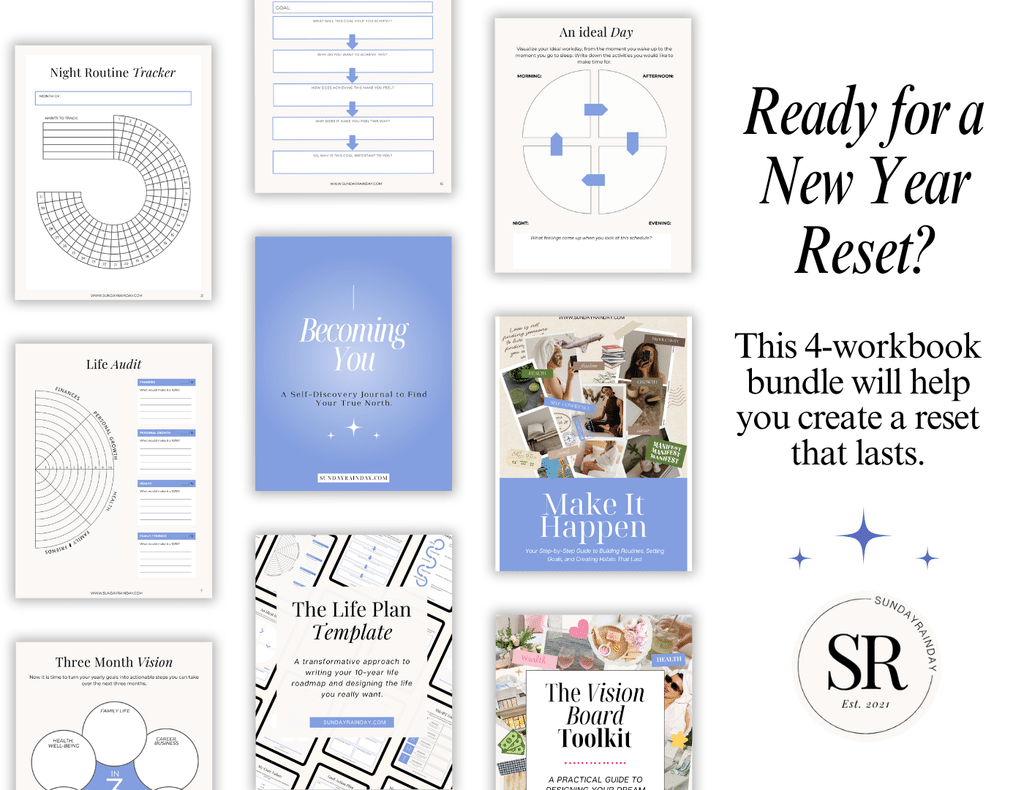
That’s the gap the New Year Planning Bundle was created to fill. It helps you:
- capture the clarity you have in January before it fades
- turn your intentions into defined goals
- build habits and routines that don’t rely on motivation
- make a plan that still works once life is busy again
Part 4: Clear your space, at home and on your screens
Your home is either helping you rest or reminding you of everything you haven’t done. Darby Saxbe and Rena Repetti, two psychologists at the University of California, asked couples to give a tour of their homes and then followed them for several days. The women who talked about clutter and unfinished projects had a pattern of stress hormones linked to poorer health, and their mood dropped as the day went on. The women who described their homes as restful showed the opposite.
That’s the reason nine of the 25 things are about your surroundings, and it’s also a warning. Nine clearing projects in one weekend is a good way to end up sitting on the floor among bin bags at midnight. Choose two or three, give each one its own Saturday morning and leave the others for February.
13. Get organised
Being organised mostly means knowing where your time is going. Time-blocking is the simplest way I know to find out. You divide your day into blocks and give each block one job, including the jobs that are easy to squeeze out, like exercise, rest and the goal you set in part one.
A digital calendar makes this easy, because the blocks can repeat every week without you rebuilding them. Start with what’s fixed, such as work and school runs, and then place everything else around it.
Related read: How to Organize Your Entire Life (With a Simple Checklist)
14. Declutter your space
Clutter is a collection of small decisions you haven’t made yet, and each one takes a little of your attention every time you walk past it. Clearing it brings a relief that’s hard to describe until you’ve felt it.
Work through one small area at a time, a drawer before a room and a room before the whole flat. For each thing, decide whether to keep it, give it away or throw it out, and take the bags out of the house the same day so they don’t become clutter themselves.
15. Deep clean your space
Once the clutter has gone, a proper clean is much quicker, and it’s a satisfying way to mark the start of the year. Do the jobs you’d normally skip: behind the sofa, inside the oven, the tops of the cupboards.
Then set up a light weekly schedule, with a room or a task for each day, so that it never builds up again. Fifteen minutes a day keeps a home clean, and it gives you your Saturdays back for the things on the rest of this list.
16. Rethink your space
This is where Wendy Wood’s research becomes practical. To build a good habit, take away the steps that stand between you and it. Lay your gym clothes out the night before, leave the book on your pillow and keep the yoga mat unrolled in the corner.
For a habit you’d like to drop, add steps. Keep the television remote in a drawer, move the apps you overuse off your home screen and store the wine at the back of a high cupboard. A few seconds of extra effort is often all it takes to make you stop and think.
17. Declutter and organise your wardrobe
Most of us wear a small part of what we own and push past the rest every morning. Go through your wardrobe one piece at a time and ask yourself whether you’ve worn it in the last year, whether it fits and whether you feel good in it.
Keep what passes, and sell or donate what doesn’t. Getting dressed becomes quicker, and you can finally see which things you really need before you buy anything new.
18. Sort your makeup and skincare
Makeup and skincare don’t last for ever, and out-of-date products can irritate your skin. Look for the small open-jar symbol on the packaging, which tells you how many months a product is good for once it’s been opened, and throw away anything that’s past it.
While you’re there, put together the things you use every day and note what you already have plenty of. It’s a small job, and it will save you from buying your fourth half-used moisturiser.
19. Try out new apps
A good app can make a new habit much easier, as long as you choose it for a reason. For each goal you set in part one, search for the best apps for it, try two or three for a week and keep only the one you enjoy opening.
The ones I rely on are TickTick for to-do lists and routines, Headspace for meditation and Google Calendar for planning. And while you’re adding apps, delete the ones that take more from your day than they give back.
20. Organise your laptop, phone and paper clutter
Digital clutter is easy to ignore until you lose ten minutes looking for one file. Create a simple folder system, delete what you don’t need, back everything up and set up a password manager so that you can stop reusing the same password everywhere.
Then do the same with paper. Go through the pile once and decide for each sheet whether you need the original, a scan or nothing at all. Next time you need an important document in a hurry, you’ll be glad you did.
21. Clean your inbox
A full inbox is a daily reminder of things undone. Start by unsubscribing from every newsletter you delete without reading, since that will remove most of tomorrow’s mail before it arrives.
Next, create a few folders for what you need to keep, and archive everything else in one go. As a bonus, fewer marketing emails mean fewer things you suddenly feel you need to buy.
Part 5: Keep growing and put your money in order
The last four things are about the person you’re becoming over the year, and about the money that supports the life you want. They’re the easiest to keep postponing, because nothing goes wrong if you skip them this month.
That’s also why January is the right time for them. You only need to begin: one book chosen, one hobby tried, one honest look at your accounts. Each of these gets easier once you’ve done it the first time.
22. Pick new podcasts or books
What you read and listen to shapes how you think, often more than you notice. Choosing a book for January is a small promise to yourself that you’ll keep learning this year, and a commute or a walk is plenty of time for a podcast.
These are the books that helped me most when I began changing my own life:
- Atomic Habits by James Clear
- You Are a Badass by Jen Sincero
- The Mountain Is You by Brianna Wiest
- The Psychology of Money by Morgan Housel
- Ikigai: The Japanese Secret to a Long and Happy Life by Héctor García
- The Automatic Millionaire by David Bach
23. Start a new hobby
A hobby is one of the few things you do for no result at all, and that’s exactly what makes it good for you. It takes you out of your usual week, teaches you something and often introduces you to people you’d never have met otherwise.
If you can, choose one that gets you outdoors. A study of almost 20,000 people in England found that those who spent at least two hours a week in nature were more likely to report good health and wellbeing, and it didn’t matter whether they took it as one long walk or several short ones.
24. Define a personal finance strategy
Money worries have a way of sitting behind everything else, so it’s worth an evening to look at yours properly. Write down what came in last month and everything that went out, and you’ll have the beginning of a budget and probably a surprise or two.
Then work out your net worth by adding up what you own and subtracting what you owe. It gives you one number to improve over the year, and a single money goal to set beside it.
25. Create a new stream of income
A second source of income, even a small one, gives you room to breathe. It can help you pay off debt faster, build up savings or simply depend a little less on one employer.
You don’t have to launch a business this month. Give it an hour a week in January and test one idea. You could sell the things you cleared out in part four, offer a skill you already have or look into what it would take to turn a hobby into something that pays.
How to fit these 25 things into your January
Twenty-five is a lot, and nobody needs all of them in the same month. The list works best as a menu. Take the first three, because they tell you what the rest are for, and then choose one or two from each of the other parts, according to what your life audit showed you.
If it helps to have a rhythm, here’s one that follows the order of the list. It leaves the heaviest clearing jobs for the middle of the month, when the first rush of energy has settled and you know what you’re clearing space for.
| Week | Focus | Things from the list |
|---|---|---|
| Week 1 | Know what you want | 1, 2 and 3 |
| Week 2 | Habits, body and mind | Two or three from 4 to 12, starting with sleep |
| Week 3 | Your space | Two or three from 13 to 21 |
| Week 4 | Growth and money | One or two from 22 to 25, then look back over the month |
A fresh start that lasts past January
January gives you something you can’t produce on demand for the rest of the year, which is the feeling that you’re allowed to begin again. The 25 things on this list are ways of turning that feeling into something more solid before it fades.
Start by finding out where you stand and what you want. Build one or two habits and arrange your home so they’re easy to keep. Look after your sleep, clear the spaces that weigh on you, and take one honest look at your money. A handful of these, chosen for your year and done properly, will take you further than all 25 done in a rush.
February is when you find out whether there was a plan behind the motivation, and that’s the whole reason the New Year Planning Bundle exists. Its four workbooks and 375 pages take you from knowing yourself to a life plan, a vision board and the habits and routines that make them real, so that what you start in January is still going in June.
