

How to Stop Living on Autopilot and Get Your Life Back
Do you ever get the feeling that life is running you, instead of the other way around?
You wake up, move through the day on rails, answer what needs answering, tick off what needs ticking, and then it’s dark again. The days blur. Weeks disappear. You reach the milestones you were supposed to want and feel strangely little. That quiet, drifting numbness has a name. It’s living on autopilot, and it’s one of the most common ways to lose years without ever deciding to.
Autopilot isn’t a character flaw or a sign you’ve failed at life. It’s a default your brain slips into, and defaults can be changed. Getting your life back doesn’t take a dramatic reinvention or a move across the world. It takes a handful of small, deliberate shifts that pull you back into the driver’s seat.
Let’s walk through them.
Save this article
What living on autopilot actually looks like
Most people don’t notice they’re on autopilot, because the whole point of autopilot is that you stop noticing. So before the how, here’s the recognition. You’re probably living on autopilot if a few of these feel familiar:
You drive home and can’t remember the drive. You eat without tasting the food. You pick up your phone without deciding to, and lose twenty minutes you’ll never account for. You say yes before you’ve thought about whether you want to. Your weeks feel like copies of each other. And every so often a small voice asks, is this it, before the noise of the day drowns it out again.
None of that means something is wrong with you. It means your life has quietly organised itself around habit and obligation, and your own presence got edited out. That’s fixable.
Related read: How to Tell When You’re Outgrowing Your Life
Why your brain puts you on autopilot
It helps to understand that autopilot is not laziness. It’s biology doing its job.
Your brain runs a system that switches on whenever you’re not focused on a specific task, sometimes called the default mode network. Its purpose is to save you from mental overload by letting routine things happen without conscious effort. The same goes for the mental shortcuts, the heuristics, that let you make small decisions fast, and the muscle memory that lets you wash the dishes while your mind is elsewhere. In other words, autopilot is efficient. It exists so you don’t have to consciously think through every step of brushing your teeth.
The problem is that the system doesn’t know when to stop. Left unchecked, it quietly takes over the parts of life that were supposed to be yours to feel: your relationships, your mornings, your sense of what you actually want. So the goal isn’t to fight your brain. It’s to reintroduce moments of choice into a life that’s been running on default.
Find your way back to what matters
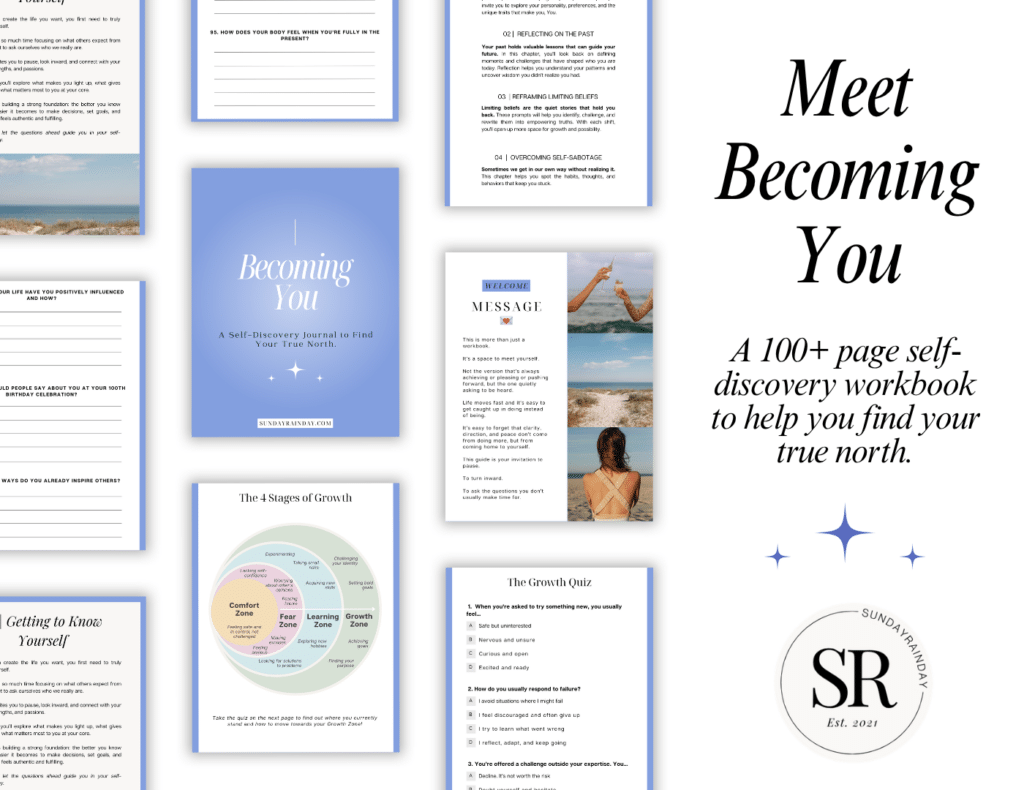
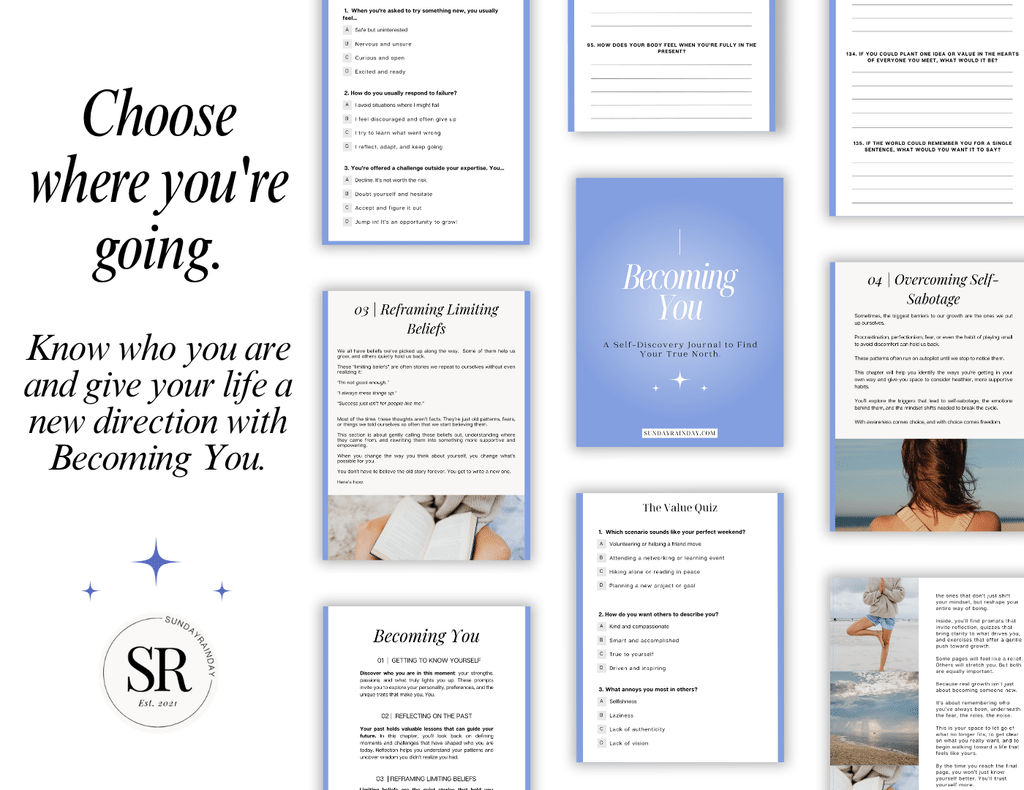
Living on autopilot often means you’ve lost touch with what you actually want. Becoming You is the 103-page guided self discovery journal I created to help you reconnect with it, through prompts, quizzes and exercises that bring your values, your patterns and your next direction back into focus.
How to stop living on autopilot: 9 shifts to get your life back
Each of the shifts below does the same basic job: it puts a moment of choice back into a part of your life that’s been running on default.
The first four are about direction: knowing what matters to you, claiming your mornings, protecting your time and focusing on the few things that count. The next three work on your habits and your attention, which is where autopilot does most of its quiet damage. The last two are about the people you spend your life with and the rest you need to stay present for it. None of them asks you to overhaul everything at once, and you don’t need to work through them in order.
Read them all, notice the one that stings a little in recognition, and start there.
1. Name what actually matters to you
You can’t live intentionally towards a target you’ve never defined. Most of us are running on priorities set by someone else, the ones we absorbed from family, work or whoever we were trying to impress, and then we wonder why reaching them feels hollow. Autopilot loves a borrowed goal, because a borrowed goal never asks you to stop and check whether you still agree with it.
So get specific about what you actually value. Leave aside what sounds impressive and look for what makes you feel most like yourself: creativity, freedom, close relationships, learning, quiet, adventure. If you’re not sure, look back over the last few months and notice the moments you felt most awake and the ones you’d happily never repeat. The first usually point straight at your values, and the second show you where your life has drifted away from them.
Then choose your top three and hold them up against an ordinary week. How many hours went to each? Most people find a gap between what they say matters and where their time actually goes, and that gap is exactly where autopilot lives. You don’t need to close it overnight. Start by folding one value-aligned thing into your week and let it grow from there. When your days begin to reflect what you care about, even in small ways, life stops feeling like a script someone else wrote.
Related read: 38-Self-Discovery Questions to Find Out Who You Are
2. Start the day on your own terms
If the first thing you do every morning is reach for your phone and step straight into everyone else’s demands, you’ve handed the day away before it’s begun. Your morning tends to set the pattern for everything after it. When the first hour is spent reacting to messages, news and other people’s emergencies, your attention stays in that mode, and you spend the rest of the day answering instead of choosing. No wonder it feels like your time belongs to other people.
Claim the first stretch of the morning for something that’s yours. It doesn’t need to be an elaborate routine. Ten or thirty minutes of reading, walking, stretching or writing before the world gets its hands on you is enough to change the whole tone of the day. You’re telling yourself, quietly, that your life is yours first.
It helps to decide the night before what that time will hold, so you’re not making the choice half asleep. Leave the book on the table, put your trainers by the door, and charge your phone outside the bedroom if you can. The activity itself matters less than the fact that you chose it. Even on the mornings when it shrinks to five minutes with a coffee by the window, you’re starting the day as someone who decides, and that tends to carry into everything that follows.
3. Protect your time like it belongs to you (because it really does)
So much of autopilot is just accumulated yes: yes to the invitation you didn’t want, the favour you resented, the commitment you agreed to on reflex. Each one is a small withdrawal from a finite account, and together they add up to a life spent on other people’s priorities.
Most of those yeses aren’t really decisions. They come from habit, guilt or the fear of disappointing someone, and you give them before you’ve checked whether you have the time or the energy. A simple way to break the reflex is to stop answering on the spot. “Let me check and get back to you” buys you a few hours to ask whether this is something you’d choose if saying no didn’t feel so uncomfortable.
Getting comfortable with no is one of the most direct ways to get your life back. Every no to something that drains you is a yes to something that matters. You don’t owe anyone an essay of justification, either: “I can’t make that work” is a complete sentence. It will feel awkward the first few times, and some people may be surprised. Most of them adjust quickly, and the time you reclaim is worth far more than the brief discomfort it costs. Protect your time like the limited, unrepeatable thing it is.
4. Trade the endless to-do list for a few things that matter
Busy is not the same as meaningful, and somewhere along the way we started treating a full calendar as proof of a full life. You can spend a whole day in motion and touch nothing that actually counts. A long list also has a way of hiding what matters, because small, quick tasks are always easier to tick off than important ones, and crossing things out can feel like progress even when nothing meaningful has moved.
Try sorting your tasks the way the Eisenhower Matrix does: what’s urgent and important gets done now, what’s important but not urgent gets scheduled, what’s urgent but not important gets handed off, and what’s neither gets cut. Then borrow a principle from Cal Newport’s idea of slow productivity: fewer things, done well, at a sustainable pace, instead of everything crammed into every hour.
In practice, choose no more than three things each day that would make it feel worthwhile, and do at least one of them before you open your inbox. Everything else can have the time that’s left. Some days, those three things will be work. On others, one of them might be calling a friend or finishing the chapter you’ve been meaning to read. Doing less on purpose is how you finally make room for the right things, and there’s more on this in why small wins matter more than a long to-do list.
5. Build your life back one small habit at a time
The reason dramatic transformations often fail is that they ask you to become a different person by Monday. Real change is quieter. It compounds, and direction matters more than speed.
Pick one small thing and let it be small: a short walk after dinner, a glass of water before coffee, lights out fifteen minutes earlier. Protect your sleep like the foundation it is, and move your body in a way you genuinely enjoy instead of as punishment, whether that’s dancing, hiking, yoga or a sport you loved as a child. These aren’t luxuries you earn after the real work. They’re the fuel that makes an intentional life possible in the first place.
To help a new habit stick, attach it to something you already do. The walk happens straight after you clear the table, the glass of water sits next to the kettle, and the reminder to wind down goes off when you brush your teeth. Linking a new behaviour to an existing cue takes the decision out of it, which is exactly what you want while the habit is still fragile. And when you miss a day, which you will, simply pick it up again the next. One missed day changes very little. What undoes a habit is the quiet giving up that tends to follow it.
6. Notice how your habits actually make you feel
Autopilot thrives on habits you’ve never examined: the scroll, the snooze, the third coffee, the phone in bed. You do them without deciding to, and they quietly set the tone of your whole day.
So run a simple audit. For a week, just notice how specific habits leave you feeling: sluggish after an hour on your phone, wired and anxious after skipping lunch, flat after a night of bad sleep. Awareness is where the loop starts to loosen, because once you’ve genuinely felt what a habit costs you, swapping it for something that lifts you stops being a chore and starts to feel obvious.
Keep the audit light. A note on your phone with the habit and one word for how you felt afterwards is enough, and by the end of the week patterns will start to appear on their own. Resist the urge to fix everything you notice. Choose the one habit that costs you most and ask what it’s doing for you, because most habits meet a real need: the scroll is often a break, and the third coffee is often tiredness. Once you know the need, you can meet it in a way that leaves you feeling better, and the old habit has much less to hold on to.
7. Come back to the present
The antidote to autopilot is presence, and presence is a skill you can practise. Living on autopilot means being somewhere without really being there, and presence simply means closing that gap.
It matters more than it sounds. When the Harvard psychologists Matthew Killingsworth and Daniel Gilbert used an app to check in with around 2,250 people at random moments of their day, they found that people’s minds were wandering nearly half the time, and that they were less happy when their minds wandered than when they were focused on what they were doing. Much of what makes a day feel flat, in other words, is that we’re barely in it.
You don’t need an hour of meditation. Give one thing your full attention for ten minutes a day: a coffee with no phone, a walk with no podcast, a conversation where you’re actually listening instead of planning your reply. Your mind will drift, and that’s fine, because noticing and coming back is the practice itself. The point is to inhabit your own life while it’s happening, instead of narrating it from somewhere far away.
8. Choose the people who bring you back to life
The people around you shape your energy and your mindset more than almost anything else. Some relationships wake you up, and others quietly pull you back under. The Harvard Study of Adult Development, which has followed its participants since 1938, found that close relationships, more than money or fame, are what keep people happy throughout their lives. The people who were most satisfied with their relationships at 50 were the healthiest at 80.
You’re allowed to be intentional here. Ask yourself, honestly, who you feel most like yourself around, who supports where you’re headed, and who leaves you drained every single time.
Autopilot affects relationships too. It’s easy to keep seeing the same people in the same way out of habit, while the friendships that matter most get whatever energy is left at the end of the week. Be deliberate about those: put the call in your diary, suggest the walk, send the message you keep composing in your head. You don’t have to stage dramatic exits from the rest. You can simply give more of your time to the people who bring you back to life and less to the ones who don’t. Your attention is precious, so spend it on people who notice you’re there.
9. Choose progress over perfection, and let yourself rest
Perfectionism is autopilot wearing a productive disguise. It keeps you overplanning, hesitating and stuck at the starting line while feeling busy the whole time. And it’s a trap, because a thing done at eighty per cent beats a perfect thing that never gets finished.
It also feeds autopilot in a quieter way. When everything has to be done properly, there’s never any time left for what you’d actually choose, so the days fill up with polishing and redoing while the things you care about wait for a free afternoon that never comes. So lower the bar to a place you’ll actually clear, and ask a kinder question: is this good enough to move forward?
Then let yourself stop. Schedule rest the way you’d schedule anything important, instead of treating it as the reward you get after you collapse: a walk, a nap, an afternoon of doing nothing on purpose. Exhaustion is one of the fastest routes back to autopilot, because a tired mind falls back on habit for almost everything. Rest is part of an intentional life. It’s how you stay awake for it.
Related read: How to Get Your Life Together by Closing Your Open Loops
Every no to something that drains you is a yes to something that matters.
How to start without overwhelming yourself
Nine shifts is a lot to take on at once, and trying them all in the same week is a reliable way to end up back where you started. Choose one, ideally the one that made you wince a little as you read it, and give it two or three weeks before you add another. Notice what changes, even when it’s small: a morning that felt like yours, an evening you can actually remember. That’s how autopilot loosens, one deliberate choice at a time.
If you’d like a gentle structure for that first shift and the ones after it, Becoming You gives you one. Its prompts and exercises help you notice where your days are going, decide what you want them to hold, and take small, deliberate steps back into the driver’s seat.
Frequently asked questions
What does living on autopilot mean?
Living on autopilot means moving through your days on habit and routine without conscious awareness or choice. You do things without really deciding to, stop noticing your own experiences, and often can’t remember stretches of your day. It’s your brain running on default to conserve energy, which is efficient for small tasks but quietly costs you presence in the parts of life that matter.
How do I stop living on autopilot?
Start by reintroducing moments of choice into your day. Name what actually matters to you, claim the first part of your morning, protect your time by saying no more often, and practice giving one thing at a time your full attention. You don’t need to change everything at once. Picking one small, intentional shift and repeating it is what breaks the pattern.
Why do I feel like I’m living on autopilot?
Usually because your life has organised itself around obligation and habit, and your own presence got edited out. Your brain’s default mode network takes over routine activities so you don’t have to think about them, but left unchecked it starts running the parts of life that were meant to be felt. Add a busy schedule and constant phone use, and the drift happens without you noticing.
Is living on autopilot a sign of depression?
Not on its own. Autopilot is a normal, common experience that usually responds to small intentional changes. That said, if the numbness is persistent and comes with a lasting loss of interest, low mood, or feeling disconnected from everything for weeks at a time, that can point to something deeper like depression, and it’s worth talking to a doctor or a qualified professional. There’s no downside to reaching out, and you don’t have to sort it out alone.
How long does it take to get your life back?
There’s no fixed timeline, and that’s not the useful way to think about it. You feel the shift almost immediately the first time you’re genuinely present or spend a morning on your own terms. The lasting change comes from repetition, from small choices compounding over weeks and months. Direction matters far more than speed here.
