

How to Become a Morning Person: 15 Tips + The Routine That Makes It Stick
If you’ve ever wondered how to become a morning person without white-knuckling a 5 a.m. alarm you secretly hate this guide is for you.
Here’s the truth most morning routine posts skip: waking up early isn’t a personality trait.
It’s a system.
Night owls don’t become early birds through willpower; they do so by changing the conditions around their sleep and their mornings until waking up early stops being a fight.
Yes, science tells us we each have a chronotype, which is a natural preference for mornings or evenings, partly written into our genes.
But your chronotype is a starting point, not a life sentence.
Research on circadian rhythms shows that our internal clocks respond strongly to cues we control: light exposure, meal timing, sleep consistency, and evening habits.
Shift the cues, and the clock follows.
That’s what every tip in this guide is really doing: nudging your internal clock, one signal at a time, instead of fighting it head-on.
That’s exactly what this guide gives you.
In the first part, you’ll find 15 practical tips to become a morning person, most of which start the night before.
In the second part, you’ll find the morning routine habits that make those early hours actually worth waking up for. Because becoming a morning person isn’t the goal.
It’s what your mornings make possible that really matters.
Let’s get started.
Pin for Later 📌

Why Become a Morning Person at All?
Before we cover the how, a quick word on the why because motivation matters when your alarm goes off in the dark.
The biggest gift of early mornings isn’t productivity.
It’s ownership.
The first hour of the day is the only one nobody else has a claim on: no emails, no meetings, no requests.
So whatever you place in that hour: movement, planning, journaling, or quiet coffee, happens before the world starts negotiating with you.
That’s why so many of the habits that change lives live in the morning: it’s the one time slot the day can’t steal back.
There’s a practical benefit too.
When your morning is calm and deliberate, you make better decisions all day. You’ve already planned your priorities, so you’re less reactive. You’ve already done something for yourself, so you’re less resentful by evening.
A rushed, chaotic morning does the exact opposite.
It puts you in catch-up mode before 9 a.m., and catch-up mode usually lasts until bedtime.
But none of this requires 5 a.m., by the way.
Becoming a morning person simply means waking up early enough to start your day with intention instead of adrenaline.
For some people that’s 5:30; for others it’s 7:15. The clock matters less than the intention and calm.
Related read: How to Create Your Ideal Morning Routine Based on Your Goals
Part 1: 15 Tips to Become a Morning Person
1. Win the Night Before
Becoming a morning person starts the evening before.
Go to bed early enough to get your full night of sleep, prepare your clothes for the next day, and decide what you’ll have for breakfast.
Every decision you make at night is one less obstacle between you and a calm morning.
Think of it as lowering the activation energy of your morning.
When your future self can move through the first thirty minutes of the day with ease, clothes ready, breakfast decided, bag packed, waking up early stops feeling like a project and starts feeling like a glide path.
A simple evening reset takes ten minutes: tidy the kitchen, lay out tomorrow’s outfit, glance at your calendar, set the coffee machine. Ten minutes at night buys you thirty in the morning.
2. Get Enough Sleep (Seriously)
You can’t out-routine sleep deprivation.
We all have different sleep needs; if your body asks for 7 or 8 hours, give it that time. Waking up early on too little sleep isn’t discipline. It’s a form of debt that comes due by mid-afternoon.
Becoming a morning person means shifting your sleep window earlier, not shrinking it.
Here’s the mental reframe that makes this easier: your wake-up time is decided at bedtime.
If you need to be up at 6:00 and you need 7.5 hours, then 10:30 is your real deadline. Everything after that will negatively impact tomorrow morning.
Set a bedtime alarm to let you know when you need to get ready for your evening reset.
It sounds silly until you realize it works even better than the morning one.
3. Avoid Screens Before Bed
Avoiding screens for at least an hour before bed helps you fall asleep faster and sleep more deeply. And that makes the early alarm dramatically easier.
That’s because blue light suppresses melatonin, the hormone that signals your body it’s time to sleep, and the endless-scroll design of most apps keeps your mind alert exactly when it should be winding down.
If a full screen-free hour feels radical, start smaller: switch your devices to night mode after dinner, charge your phone outside the bedroom, and replace the last twenty minutes of scrolling with a book or a bath.
4. Journal Before Bed
If you’re an overthinker, this is your call.
Writing your thoughts down before bed gets them out of your head and onto paper, so they stop circling once the lights are off.
You’ll fall asleep faster and wake up with a clearer mind.
Journaling might sound abstract if you’re a beginner but you don’t need a system to make it work.
These three prompts are enough to get started:
- What’s on my mind?
- What’s done and can be released?
- What matters tomorrow?
Five minutes, done.
Think of it as closing the browser tabs of your mind before shutting the laptop.
5. Try a Sleepcast or Meditation
Sleepcasts changed my nights.
I discovered them through Headspace during a stressful time in my life, and my smartwatch data confirmed what I could feel: my sleep quality genuinely improved.
If stress or a busy mind keeps you up, a guided wind-down is one of the easiest fixes to try.
A sleepcast is essentially a bedtime story for adults.
It’s a calm voice describing a slow walk through a night market or a train ride through the countryside, deliberately uneventful, designed to give your mind something soft to hold onto until it lets go.
Meditation apps like Headspace and Calm both offer them, along with breathing exercises if you prefer something shorter.
6. Make Your Bedroom a Place You Sleep Well In
Declutter the room, invest in quality sheets (and a good mattress if you can), air the room before bed, and keep the temperature around 17°C which is the sweet spot for falling asleep.
A restful environment does half the work of waking up rested.
Two upgrades punch above their weight: darkness and quiet.
Blackout curtains (or a sleep mask) protect your melatonin from streetlights and early summer sunrises, and earplugs or a white-noise app soften a noisy street.
Your bedroom should give your body a clear message: this is where sleep happens.
7. Replace Your Alarm With Music
No one enjoys being ripped awake by a blaring alarm.
Swap it for music you love at a reasonable volume, or try a sunrise alarm clock that wakes you gradually with light.
The gentler the wake-up, the less your brain associates mornings with punishment.
Sunrise alarms deserve a special mention if you struggle most in winter.
They simulate dawn by brightening gradually over twenty to thirty minutes, so your body starts surfacing from sleep before the sound ever plays.
Waking up in simulated daylight feels categorically different from being yanked out of the dark, especially in those months when the real sun won’t show up until 8 a.m.
8. Don’t Hit Snooze
Hitting snooze is the worst way to start the day.
Each time you fall back asleep and get jolted awake again, your body repeats the same biological shock and you end up climbing out of bed groggier than before.
That fragmented sleep isn’t restorative; it’s just repeated interruptions dressed up as rest.
Here’s a mechanical fix: put your alarm across the room so you have to stand up to silence it.
Once you’re out of bed, the hardest part is over.
9. Shift Gradually, Not Brutally
If you want to become a morning person and actually stick to it, don’t jump from an 8 a.m. wake-up to 5:30 overnight.
Wake up 15 to 30 minutes earlier each week until you reach your target. Small shifts let your body adapt when brutal ones make you quit by Thursday.
If you really struggle to wake up early without feeling tired, here’s a realistic transition.
If you currently wake at 8:00 and want to reach 6:30, that’s:
- Week one at 7:40
- week two at 7:20
- week three at 7:00, and so on.
By doing so, you will wake up at 6:30 in about six weeks.
Move your bedtime earlier by the same increments.
Yes, six weeks sounds slow, but it’s the version that finally holds.
The overnight version usually collapses within days and convinces you (wrongly) that you’re just not a morning person.
10. Plan a Breakfast Worth Waking Up For
Decide the night before what you’re going to eat.
Pancakes and good coffee? A blueberry muffin and tea? Give your morning self something to look forward to.
A nourishing breakfast also stabilizes your energy: no 10 a.m. sugar crash, no vending-machine snacks on the way to work.
This tip sounds almost too simple, but planning is a real source of motivation.
On the hardest mornings, you won’t get out of bed for your goals. You’ll get out of bed for the coffee ritual you love. So use that.
Make your first fifteen minutes genuinely pleasant and your brain will stop treating the alarm as the enemy.
11. Have a Plan for the Day
Knowing exactly why you’re getting up is a quiet superpower.
Set 3 to 5 clear goals for the day the night before or first thing in the morning. Because purpose gets you out of bed faster than any alarm.
There’s a difference between waking up to a to-do list and waking up to a plan.
A list is forty items shouting at you; a plan is three priorities you chose deliberately because they will move you forward.
When you know your first task of the morning before you fall asleep, your mind starts the day already pointed somewhere.
And mornings with direction feel entirely different from mornings spent deciding.
12. Plan Something Uplifting
Give your day a bright spot: a drink with a friend after work, a good movie, a bath and your comfiest clothes.
When your day includes something you’re looking forward to, mornings stop feeling like the start of a slog.
13. Start With a Slow Morning
If you have been trying to wake up earlier to no avail, slow mornings are the gentlest bridge you need.
Instead of rushing, you wake early enough to move through your morning calmly: breakfast without hurry, a few minutes of journaling, no sprinting out the door.
The early alarm becomes the start of a peaceful ritual rather than a punishment, which changes your whole relationship with it.
14. Stay Positive About the Process
Your mood can make or break the transition.
You can’t control everything about your day, but you can decide how you meet it.
A little gratitude in the morning goes further than you’d think and it beats starting the day already resenting your alarm.
Expect an adjustment period too.
The first week of earlier wake-ups usually feels worse before it feels better.
That’s your body recalibrating, not evidence of failure. Give the experiment two to three weeks before you judge it.
15. Be Consistent (Even on Weekends)
Your body can’t learn a rhythm you keep changing.
Wake up at (roughly) the same time every day, weekends included, and within a few weeks something surprising happens: you start waking up before your alarm.
The weekend part matters more than people think.
Sleeping in until 10 on Saturday and Sunday creates what researchers call social jetlag.
By Monday morning, your body clock has drifted two time zones away from your alarm clock.
You don’t need military rigidity; keeping your weekend wake-up within about an hour of your weekday time is enough to protect the rhythm you’ve built.
Consistency is the tip that makes all the others stick.
Part 2: The Morning Routine That Makes Early Mornings Worth It
Becoming a morning person gives you the hours.
But what you actually do with them is what changes your life.
These 10 morning habits will help you make the most out of your mornings but you don’t need all ten of these to give your day a new direction.
Pick the handful that fit your real life and let them become automatic.
1. Let Natural Light and Fresh Air In
The moment you’re up, open the curtains and the windows.
If you have a balcony or garden, step outside for two minutes while your coffee brews.
Morning light is the single strongest signal you can send your circadian clock. It anchors your rhythm, lifts your mood, and makes tonight’s sleep come easier.
Light in the morning is literally how you teach your body to be a morning person.
2. Hydrate, Then Eat Well
A large glass of water first thing wakes up your body and metabolism after seven-plus hours without a drop.
Then have the breakfast you planned last night, unhurried, at home, like a person with time.
3. Make Your Bed and Tidy for Ten Minutes
A tidy space creates a tidy mind.
Make your bed (I let mine air out while I have breakfast first), start the dishwasher, straighten the cushions.
This tiny dose of order builds momentum and quietly frees your evenings and weekends from accumulated chores.
4. Plan Your Day
Review your schedule and confirm your top three priorities.
If yesterday didn’t go to plan, take thirty seconds to understand why and adjust your schedule.
This is the single habit I’d keep if I could keep only one. It’s the difference between running your day and being run by it.
If you’re not used to planning your time, get started easily with Google Calendar.
5. Meditate or Journal (Not Your Phone)
Don’t hand the first minutes of your day to other people’s noise.
Checking your phone first thing is one of the worst ways to start your day as it puts you in reactive mode instantly.
Before you’ve had a single thought of your own, you’re giving your attention to other people’s emails, other people’s news, other people’s highlight reels.
As you can imagine, this is not the healthiest nor the most productive way to kickstart your day.
Instead, ten minutes of meditation or a few journaling prompts can help you take time for yourself before the world starts asking for things.
Both reduce stress, sharpen focus, and build the self-awareness everything else depends on.
6. Move Your Body
Stretch for five minutes or fit in a short workout if your morning allows.
Morning movement boosts energy, focus, and mood (thank you, endorphins), and it tends to pull the rest of your day toward healthier choices.
Working out first thing also means the day can’t steal your workout later: no canceled evening plans, no “too tired after work.”
By starting the day with exercise, you ensure you actually stick to it no matter what.
7. Feed Your Mind
Read a few pages of a book, listen to an inspiring podcast, or watch a short talk with your coffee.
Reading for pleasure is linked to lower stress and better confidence and starting the day inspired makes discipline feel almost unnecessary.
Related read: 20 Simple Ways to Make Discipline Effortless
8. Express Gratitude
One of my favorite ways to start the day is to write down three things I am grateful for.
They don’t need to be deep or impressive. Yesterday’s sunset, a friend’s message, the first sip of coffee all count.
Gratitude shifts our attention to what’s already working, which is the most productive mindset there is.
If you struggle to see the good side of things, grab a gratitude journal or a new notebook and start the day with this simple ritual.
Related read: 13 Daily Habits To Express Gratitude
9. Get Ready, Even at Home
If you want to be more productive in the morning even when working from home, the rule is simple: shower, skincare, nice clothes even if your commute is ten steps to a desk.
Taking care of yourself isn’t vanity. It’s energy.
Getting ready signals to your brain that the day has properly begun, and nothing drains a workday like spending it in pajamas.
10. Leave to Music or a Podcast
End your routine with something that lifts you: an upbeat playlist, a podcast, a TED talk on the commute.
It carries the intentional tone of your morning into the rest of the day.
A Sample Morning, Put Together
To make this concrete, here’s what these habits look like assembled into one realistic morning.
Adjust every timestamp and habit to your daily life. You want something that is realistic enough to hold while moving you toward your goals.
6:30 — Wake up (alarm across the room), lights on, curtains open.
6:35 — Large glass of water and five minutes on the balcony.
6:45 — Ten minutes of journaling or meditation.
7:00 — Stretch or a short workout.
7:20 — Shower and get ready.
7:40 — Breakfast you actually look forward to, plus five minutes to confirm today’s three priorities.
8:00 — Out the door (or at your desk), with music.
Sixty to ninety minutes, entirely yours, and every piece of it planned the night before.
That’s the whole system: an evening that sets up the morning, a morning that sets up the day.
FAQ: Frequently Asked Questions About Becoming a Morning Person
1. How long does it take to become a morning person?
Most people need three to six weeks of consistent earlier wake-ups for their body clock to fully adjust. Shift gradually, 15 to 30 minutes earlier per week and expect the first week to feel hardest. Consistency, including weekends, is what makes the change permanent.
2. Can a night owl really become a morning person?
Yes. Your chronotype gives you a natural preference, but your circadian rhythm responds strongly to cues you control: morning light, consistent wake times, evening screen habits, and meal timing. Most night owls can comfortably shift their schedule earlier by one to two hours.
3. What time should I wake up to be a morning person?
There’s no magic hour. Being a morning person means waking early enough to start your day calmly and intentionally. For some that’s 5:30, for others 7:15. Choose a time that allows a full night of sleep and at least 45 unhurried minutes before your daily obligations begin.
4. Should I wake up at the same time on weekends?
Roughly, yes. Sleeping in more than an hour on weekends creates “social jetlag” that makes Monday mornings harder. Keep your weekend wake-up within about an hour of your weekday time to protect the rhythm you’ve built.
Final Thoughts
Becoming a morning person is less about the alarm clock and more about the system around it: sleep protected, evenings prepared, wake-ups gentle, and mornings filled with things worth waking up for.
Start small.
Pick two or three tips from the first list and one or two habits from the second.
And be patient with yourself for the first week or two as your body needs time to learn the new rhythm.
Then one morning, you’ll wake up before your alarm, feeling clear instead of groggy, and realize it happened: you became a morning person.
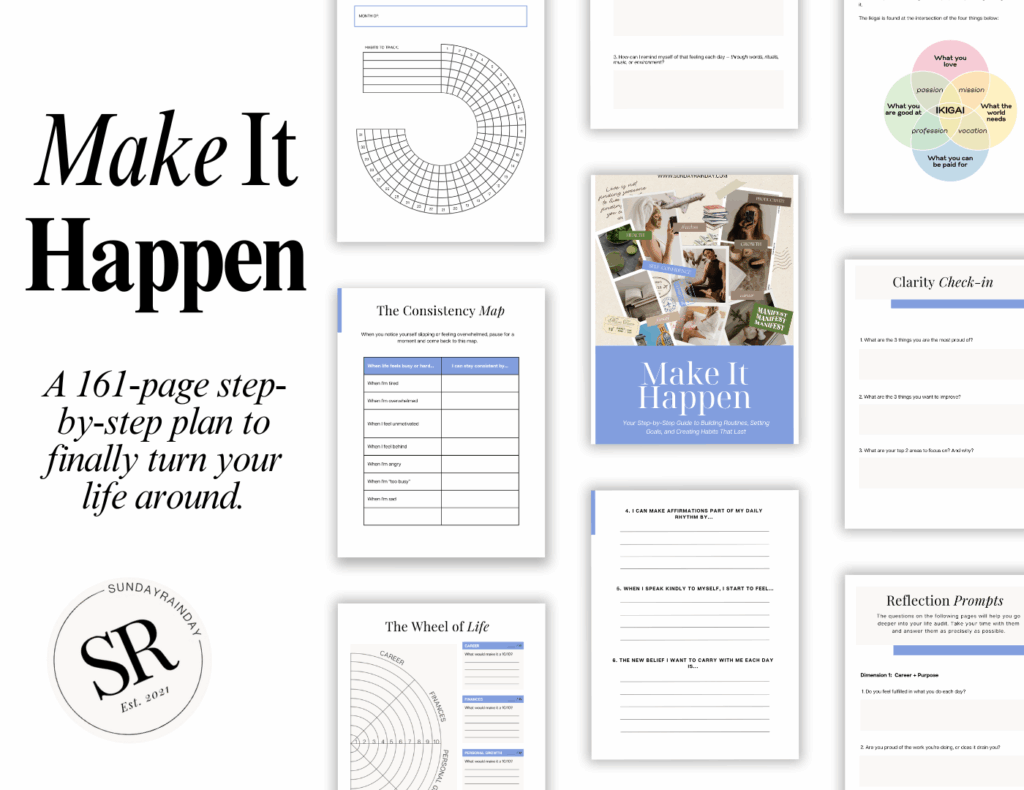
And if you want the complete system for building habits and routines that actually last, including the morning and night routines that support your bigger goals, that’s exactly what Make It Happen was designed for.