

Feeling Lost in Life? 17 Things to Do to Find Your Way
Maybe you just turned 30 and realized you’re nowhere near the life you pictured. Maybe you had one ordinary bad day at work and found yourself driving home wondering what you’re even doing with all of this.
Whatever set it off, the feeling is the same: unmoored, a little numb, unsure which way is forward. Here’s the good news. Small, deliberate actions are usually enough to get you unstuck, back in motion, and reconnected with what you actually want.
The 17 things below are exactly what to do when you feel lost in life. Work through them in order, or start with the one that meets you where you are.
Save this article
Why You Feel Lost in Life
Before the to-do list, one reframe that changes everything. Feeling lost is not a malfunction. It’s information.
Most of the time, that unmoored feeling shows up when the life you’re living has drifted out of alignment with what you actually value. You outgrew a version of yourself, but the goals, the routine, and the relationships haven’t caught up yet. So your mind keeps flagging the gap. That’s not you failing. That’s your own compass working.
Feeling lost isn’t a sign you’ve failed. It’s usually a sign you’ve outgrown the life you built. If that lands, it’s worth reading about the signs you’re outgrowing your life, because naming it is the first step toward doing something about it.
Find your way back to yourself.
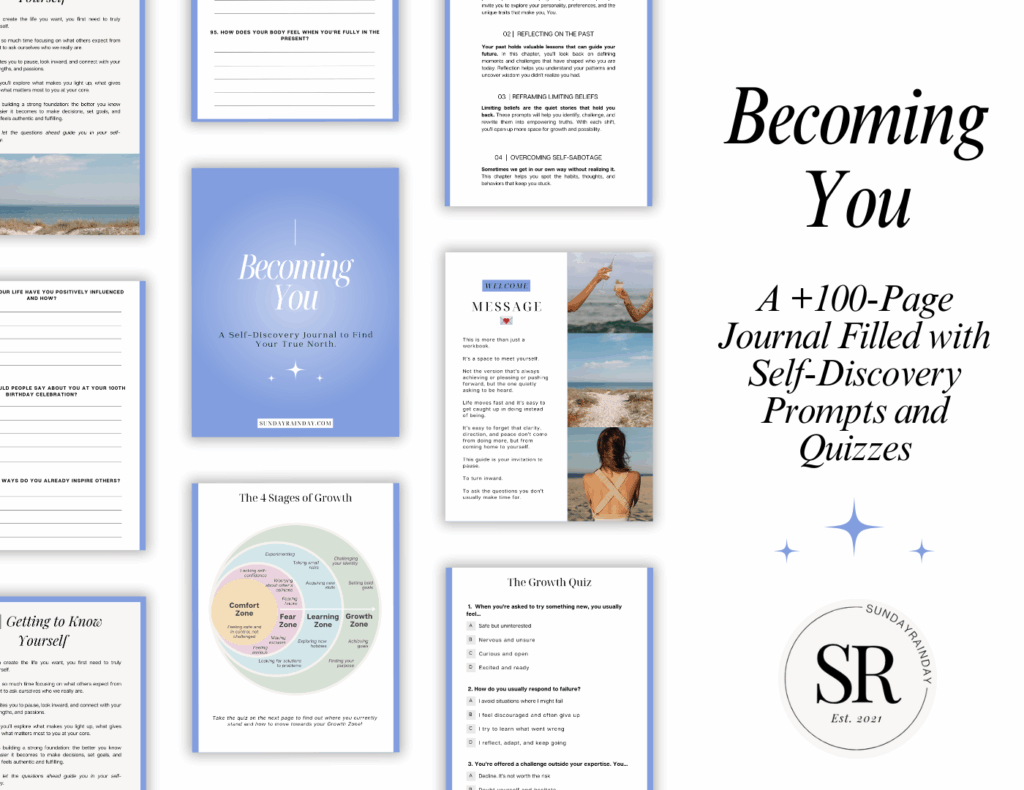
When everything feels foggy, the fastest way through is structured self-reflection, not more overthinking. Becoming You is a guided self-discovery journal that walks you from lost to clear, with quizzes and prompts designed to help you reconnect with what you want and who you are.
What to Do When You’re Feeling Lost in Life
1. Understand That it’s OK to Feel Lost
You might have a hard time believing it right now, but feeling lost in life is something everyone goes through. It’s uncomfortable, but hitting a breaking point is often where real change begins.
Not every storm comes to disrupt your life. Some come to clear your path. Once you stop treating the feeling as a problem to hide from, you can start treating it as an invitation to take a new direction.
Feeling lost isn’t a sign you’ve failed. It’s usually a sign you’ve outgrown the life you built.
2. Slow Down for a Couple of Days
The most common mistake I see people make when they want to change their lives is rushing to set new goals with no time for reflection first. When you feel lost, motivation is already hard to find, and forcing productivity on top of that just deepens the fog.
So slow down for a few days. Give yourself permission to do less. Slowing down recenters you and protects your mental health, which is the real priority when you’re in a rut. You can’t navigate from a place of depletion.
3. Spend Some Time Alone
Some people stay busy on purpose, hoping the uncomfortable feelings will fade if they never sit still. I used to cope exactly that way, and it doesn’t work. Filling every hour with work and friends might get you through the week, but it doesn’t solve anything underneath.
Time alone with your thoughts is where you actually face what’s going on and start finding answers. Don’t be afraid of the quiet. If you’re serious about turning things around, you’ll need to get comfortable with your own company, even the uncomfortable parts of it.
4. Journal
Journaling gets the noise out of your head and onto the page, where you can finally see what you’re feeling and what’s triggering it. It’s especially helpful if you deal with anxiety, because it interrupts the overthinking loop. Add it to your evening routine and it improves your sleep too.
Not sure where to start? Try these:
- The ups and downs of your day
- How you feel about the downs
- One thing you could have handled better
- One small thing you can do this week to improve your life
- And, honestly, why you haven’t done it yet
Start there and keep writing until your thoughts settle.
5. Describe Your Ideal Life
Describing your ideal life is harder than it sounds, because it forces you to separate what you actually want from what you’ve been told to want. Ask yourself an uncomfortable question: do your current plans reflect your desires, or are they there to make a parent, a partner, or some imagined audience proud?
Getting specific about your dream life gives you a direction to walk in and goals worth setting. It’s a big piece of inner work, so if you want a full framework for it, here’s how to start a new life and design the life you really want.
6. Set Achievable Goals
Once you know the direction, achievable goals are how you start moving. The simplest method: name the big things you want in the next 3 to 5 years, then break them down into yearly, quarterly, and monthly targets.
Breaking big goals into small pieces is what makes them real instead of overwhelming. And an action plan is what turns them into daily progress. If you want help with that part, here’s how to write an action plan for your goals.
7. Prioritize Self-Care
Self-care belongs near the top of the list when you feel lost, because feeling lost usually travels with stress and anxiety. This isn’t about bubble baths for their own sake. It’s about actively protecting your well-being during a hard stretch so you have the energy to change anything at all.
Putting yourself first recharges you. And a depleted person can’t rebuild a life. If self-care doesn’t come naturally to you, this self-care challenge is a gentle place to start.
8. Spend Time in Nature
Time outside does real, measurable work on your mood. It lifts how you feel, lowers stress, steadies your mental and physical health, and rebuilds a bit of self-esteem.
And there’s a specific number worth knowing. A University of Exeter study of nearly 20,000 people found that spending at least two hours a week in nature is linked to significantly better health and well-being, and it works whether you get it in one long visit or several short ones. Think of it as another way to slow down and hear yourself think.
9. Spend Less Time on Your Phone and Netflix
Most of us spend far too long on our screens. Recent estimates put the average close to seven hours a day, which adds up to a part-time job’s worth of hours every week. Imagine pointing even a fraction of that at a new skill, your fitness, or a project that actually matters to you.
There’s a mental-health reason too. A 2025 randomized controlled trial found that cutting phone screen time improved stress, well-being, depression, and sleep. When you’re already feeling low, endless scrolling quietly makes it worse. Reclaiming those hours is one of the highest-return moves you can make.
10. Read More to Find Yourself
We keep coming back to the same idea: when you feel lost, you have to turn toward yourself. Reading is one of the best ways to do it. The right book, actually applied, can genuinely reset how you think.
Personal growth reading doesn’t just reduce stress and anxiety, it sharpens your focus, improves your decisions, and builds self-awareness. Not sure what to read next? Take a look at my favorite reads.
Turn drifting into direction.
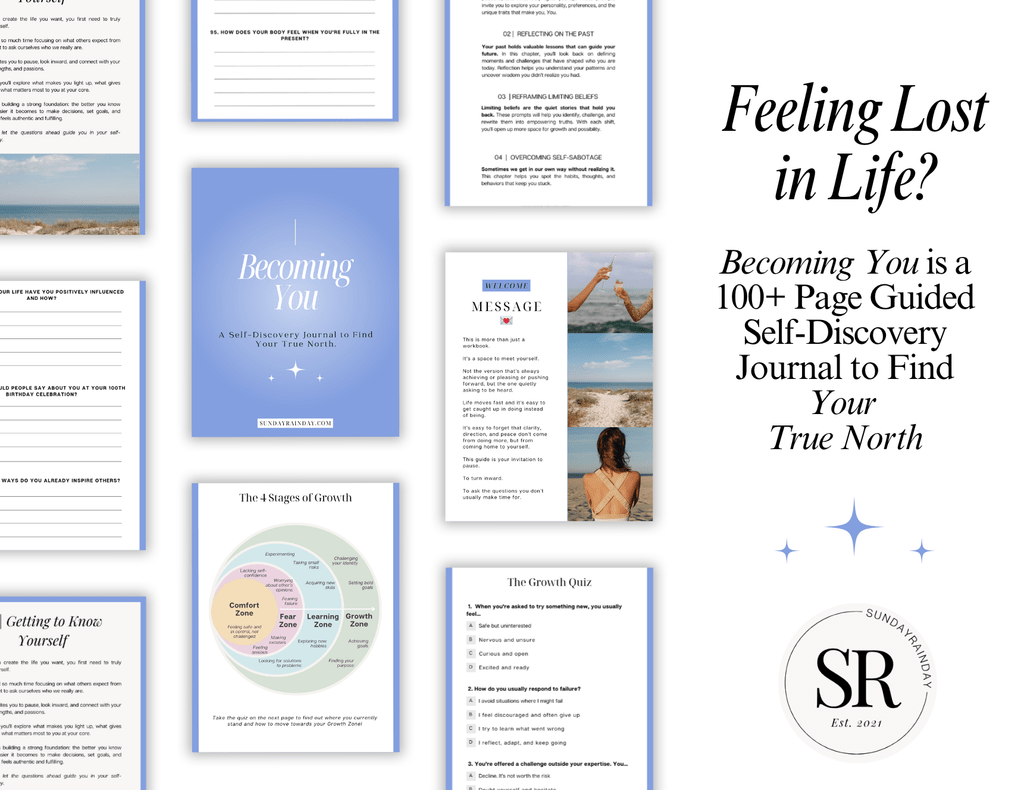
Reading opens the door. A guided practice walks you through it. Becoming You takes the self-discovery you’re doing here and gives it structure, with quizzes on your values and growth zones and prompts that turn scattered reflection into a clear sense of where you’re headed.
11. Declutter
Decluttering your space is a surprisingly effective way to feel like you’re starting fresh, because physical clutter breeds mental clutter. Our habits respond to the cues around us, so if you want to shift how you feel and act, start with your environment.
There’s no better place to begin than a real declutter and deep clean of your home. It clears the space and, more than you’d expect, it clears your head.
12. Get Your Finances in Check
Whatever your goals, healthy finances make them easier to reach. Money isn’t about accumulating more stuff. It’s about freedom: the freedom to leave a job you hate, take the break you need, or build toward retiring on your terms.
If you want to actually enjoy the present instead of quietly worrying about it, you need to feel in control of your money. That starts with two simple things: a budget you’ll use and a plan for any debt. Your future self will thank you for starting today.
13. Plan Your Time
Getting control of your time restores a sense of balance, and balance is exactly what’s missing when you’re in a rut. Time blocking is a simple way to make sure your week holds room for the things and people you care about, not just your obligations.
There’s no such thing as work-life balance, because work is part of life. But it isn’t the whole of it. However demanding your job, you need ways to disconnect and hobbies that let you breathe. Planning your time is also how you finally make space for your own goals instead of pushing them to “someday.”
14. Meditate
When you’re stressed and low, meditation is one of the fastest ways to feel like yourself again. It reminds you that you have more control than the spiral is telling you, and that sometimes the whole solution is to stop and breathe.
It also gives you perspective. Anger and fear are real, but they’re temporary, and they make terrible decision-makers. Meditating with Headspace is what helped me get a handle on my own anxiety. If you’ve never tried it, that free app is an easy way in.
15. Listen to Inspiring Podcasts
Like reading, podcasts are a great source of inspiration and perspective, and they’re just as capable of lifting your emotional well-being. The bonus is that you can absorb them while you’re doing something else: cleaning, walking, soaking in the bath, or working out.
A few of my favorites:
- Ten Percent Happier with Dan Harris
- Happier with Gretchen Rubin
- The Lavendaire Lifestyle by Lavendaire
- Design Your Dream Life with Natalie Bacon
- The Tony Robbins Podcast
Make them a regular habit and you’ll start to believe what’s actually true: you can build a new version of your life, and sooner than you think.
16. Start Something Just for Yourself
This is another way to spend time with yourself and add meaning to your days. Ask yourself honestly: are you doing anything purely for you, to learn something new or stretch past your comfort zone?
Pursuing things that light you up and give you a sense of accomplishment is a real part of living fully. A lack of hobbies and genuine connection is one of the biggest reasons people feel lost in the first place. Unless you’re on a clear mission, work alone won’t give your life meaning. Something of your own will.
17. Ask For Help If Needed
If you feel lost and can’t seem to turn things around on your own, there’s real strength in reaching out, whether that’s to someone you trust or to a professional. We all have our ups and downs. That’s part of being human.
But some seasons are genuinely heavy, and no amount of trying makes them lighter alone. If that’s where you are, don’t push through in silence. Asking for support isn’t a step backward. It’s one of the wisest moves forward you can make.
Frequently Asked Questions
Why do I feel so lost in life?
Feeling lost usually means your daily life has drifted out of sync with what you actually value or want. It often follows a change you’ve outgrown but haven’t acted on yet: a role, a relationship, a goal that no longer fits. The feeling is uncomfortable, but it’s really your own compass pointing out the gap so you can close it.
Is it normal to feel lost in life?
Completely. Nearly everyone feels lost at some point, often more than once, especially around big transitions like turning 30, changing careers, or ending a relationship. It’s a normal part of growth, not a sign that something is wrong with you.
Why do I feel lost in life in my 20s and 30s?
Your 20s and 30s pile on identity-defining decisions all at once: career, relationships, where to live, who to become. Comparison, especially online, makes it worse. Feeling lost in this stage is extremely common and usually reflects the sheer number of open questions you’re holding, not a personal failing.
How do I find myself again when I feel lost?
Start small and turn inward. Slow down, spend time alone, and journal to hear your own thoughts. Then get concrete: describe the life you actually want, set a few achievable goals, and take one small action toward them. Structured self-reflection, like the prompts in a self-discovery journal, speeds the process up.
Can feeling lost in life be a good thing?
Yes. Feeling lost is often the moment right before real growth. It means you’ve noticed a gap between the life you’re living and the one you want, and that awareness is exactly what makes change possible. Handled with intention, it becomes a turning point rather than a rut.
Final Thoughts
When you feel lost in life, the first move is to accept that this is normal and that countless people have stood exactly where you’re standing. Feeling stuck isn’t a dead end. It’s an opening, a signal that something wants to change.
If you’ve ever felt lost before, you already know it passes. But it passes faster when you take action. Point yourself toward a sense of purpose, try the things on this list that resonate, and give yourself real reasons to look forward again. That’s how the fog lifts: not all at once, but one small, deliberate step at a time.
